Does Marketing Automation Really Increase Revenue?
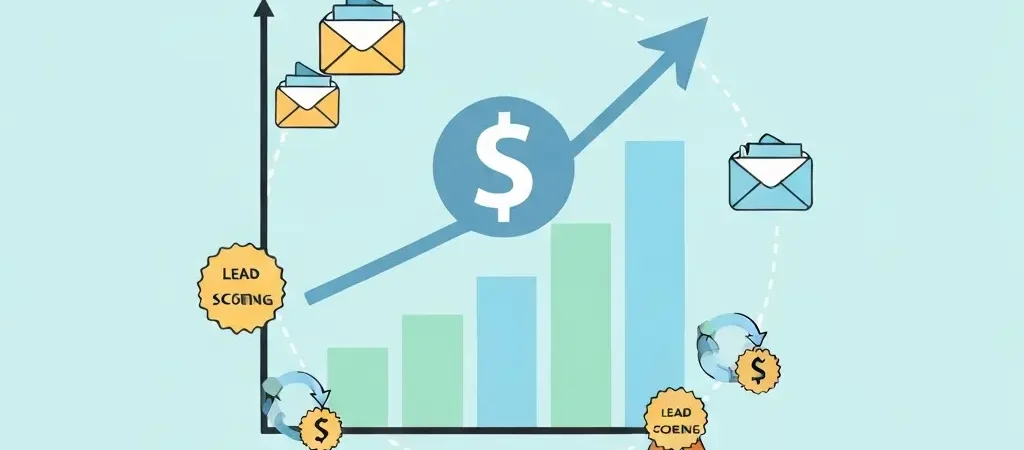
Yes — marketing automation increases revenue. The typical company attributes a 34% revenue boost to marketing automation, businesses generate $5.44 for every $1 spent on automation, and 76% of companies see a positive return on investment within one year of implementation (Thunderbit, 2025; Entrepreneur’s HQ, 2025). These figures hold across company sizes and industries. The question is not whether automation increases revenue but how the mechanism works and which factors determine the size of the increase.
What does the 2026 revenue data actually show?
The most reliable data on marketing automation revenue impact comes from aggregated studies across thousands of businesses. The figures below are drawn from 2024–2025 research and reflect real-world outcomes, not vendor claims.
| Metric | Value | Source |
|---|---|---|
| Average revenue boost | 34% | Nucleus Research, 2025 |
| ROI per $1 spent | $5.44 (3-year average) | Thunderbit, 2025 |
| Positive ROI within 1 year | 76% of companies | Entrepreneur’s HQ, 2025 |
| Revenue boost timeline | 10%+ within 6–9 months | DemandSage, 2025 |
| Investment payback period | Under 6 months (most companies) | Revenue Memo, 2025 |
| Increase in qualified leads | 451% | The Annuitas Group, 2025 |
| Automated vs manual email revenue | 320% more revenue | Campaign Monitor, 2025 |
The market size data reinforces adoption momentum. The marketing automation software market is worth $8.16 billion in 2026, growing at a 12.92% CAGR to reach $14.98 billion by 2031 (Fortune Business Insights). Businesses are not adopting automation because of vendor hype — they are adopting it because the revenue case is repeatable.
What are the three revenue mechanisms of marketing automation?
Marketing automation increases revenue through three distinct mechanisms. Understanding which mechanism is weakest in your business determines where to invest automation effort first.
1. More qualified leads reaching sales. Automation scores leads based on behavior — which pages they visit, which emails they open, which content they download. Only contacts above a score threshold move to the sales team. This prevents sales time from being spent on cold prospects and dramatically increases close rates. Companies that automate lead nurturing experience a 451% increase in qualified leads (The Annuitas Group, 2025).
2. Faster conversion through timely triggers. The window for converting a prospect is short. A lead contacted within five minutes of a trigger action is 21 times more likely to convert than one contacted after 30 minutes (MIT/Velocify). Automation closes this window automatically. An email triggered by a pricing page visit fires in seconds, not hours.
3. Higher retention extending customer lifetime value. Acquiring a new customer costs 5–7 times more than retaining an existing one. Automated post-purchase sequences, renewal reminders, re-engagement campaigns, and loyalty workflows keep customers active longer. A 5% improvement in retention increases profit by 25–95% (Bain & Company). This compounding effect is the largest long-term revenue driver of the three.
How much revenue do automated emails generate?
Automated emails generate 320% more revenue than non-automated emails, according to Campaign Monitor’s 2025 analysis. This figure reflects the combined effect of better timing, higher relevance, and behavioral targeting that manual campaigns cannot replicate at scale.
The highest-revenue automated email types are:
- Abandoned cart emails. Average 15% recovery rate. For a business with $50,000 in monthly abandoned cart value, a 15% recovery is $7,500/month in direct, attributable revenue from a single automated workflow.
- Welcome series. New subscribers are most engaged in their first 48 hours. An automated 3-email welcome series consistently outperforms a single welcome email by 3x in revenue per recipient.
- Post-purchase upsell sequences. The 48-hour post-purchase window has the highest transactional intent of any period in the customer lifecycle. Automated cross-sell emails in this window convert at 2–4x the rate of promotional blasts.
- Win-back campaigns. Contacts dormant for 90+ days triggered with a re-engagement sequence recover at 5–15% — revenue that would be lost entirely without automation.
Does automation really produce more qualified leads?
Yes. The mechanism is lead scoring — a system where automation assigns points to contact behaviors (email opens, page visits, content downloads, webinar attendance) and deducts points for inactivity. Only contacts above a defined threshold are flagged for sales follow-up.
Without lead scoring, sales teams sort through all inbound leads manually, spending the same time on cold contacts as on hot ones. With automation, only the top 10–20% of leads — those who have demonstrated intent through multiple behavioral signals — reach sales. This is why qualified lead volume increases by 451% while sales conversion rates also improve: automation filters noise, not just volume.
Lead scoring also enables the right message at the right time. A contact who has visited the pricing page three times in five days gets a different automated follow-up than one who downloaded a top-of-funnel ebook two months ago. Revenue increases because messaging precision improves across the board.
How long does it take to see a revenue increase?
The revenue timeline depends on which automation type is implemented first. Here is the data-backed timeline for each category:
- Email automation (trigger-based): Measurable revenue lift within 30 days. Abandoned cart, welcome series, and post-purchase sequences generate revenue from the first day they are active.
- Lead scoring and nurturing: Qualified lead improvement visible within 60 days. Full revenue impact (through improved close rates) typically materializes at 90–120 days.
- Retention automation: Revenue from churn reduction compounds over 6–12 months. The payback from a 5% retention improvement often exceeds the payback from all other automation types combined, but requires a longer measurement horizon.
- Omnichannel coordination: Cross-channel revenue gains become measurable at 90 days. Full compounding effect — where paid channel efficiency improves because owned channel data segments ad audiences — visible at 6 months.
Overall, 76% of companies see a positive ROI within one year. Most recoup their investment in under six months (Revenue Memo, 2025).
Does the revenue data apply to small businesses?
Yes. The 34% average revenue increase is not driven exclusively by enterprise deployments. Small businesses with 1–10 person marketing teams often see larger percentage gains precisely because the baseline is inefficient — manual processes leave more revenue on the table that automation can capture.
The key difference at small business scale is which automations to prioritize. A business sending 10,000 emails/month should not start with a 20-step omnichannel journey. The highest-leverage starting points for small businesses are: (1) welcome series, (2) abandoned cart (for e-commerce), and (3) a 30-day lead nurture sequence. These three automations consistently deliver the most revenue per hour invested in setup.
See Is Marketing Automation Worth It for Small Business in 2026? for a detailed ROI breakdown by business size and budget.
What prevents marketing automation from increasing revenue?
Marketing automation fails to increase revenue in four predictable scenarios. These are not edge cases — they represent the majority of automation underperformance cases.
Poor data quality. Automation is only as accurate as the data it acts on. Duplicate contacts, incorrect lifecycle stages, and missing behavioral data produce irrelevant triggers. Irrelevant triggers generate unsubscribes, not revenue.
Spray-and-pray workflows. Automation used to send more emails more frequently — without behavioral segmentation — typically decreases revenue by damaging list health. The 320% email revenue premium comes from relevance, not volume.
No alignment between marketing automation and sales. Lead scoring without a defined handoff protocol does not increase revenue. Sales teams need to know the threshold, receive alerts promptly, and have the context (which pages the lead visited, which emails they opened) to convert.
Measuring activity instead of revenue. Teams that track opens and clicks instead of pipeline influence and closed revenue consistently underinvest in the highest-value automations. Attribution models that connect automation touches to revenue transactions are essential for ongoing optimization.
How does CampaignOS deliver revenue results?
CampaignOS is built around the three revenue mechanisms outlined above: qualified lead generation through lead scoring, conversion through behavioral triggers, and retention through automated lifecycle campaigns. The platform provides a visual workflow builder, multi-channel delivery, and revenue attribution reporting — tools that enable the 34% revenue lift documented in independent research.
CampaignOS is free to start. For businesses evaluating marketing automation, the free tier covers email automation, lead scoring, and basic behavioral triggers — enough to generate measurable revenue before any paid commitment is required.
Start at app.campaignos.site. Also see What Is Marketing Automation and How Does It Work? (2026 Guide) and Marketing Workflow Automation: What Works, What Doesn’t, and How to Get It Right.
For content automation ROI context, see Best AI Tools for Content Marketing Automation in 2026 on Authenova.
Frequently Asked Questions
What is the average revenue increase from marketing automation?
The typical company attributes a 34% revenue increase to marketing automation. Businesses generate $5.44 in revenue for every $1 spent on automation over three years. Companies also report a 10%+ revenue boost within 6–9 months of implementation, driven primarily by improved lead quality and faster conversion timing.
How does marketing automation increase revenue specifically?
Marketing automation increases revenue through three mechanisms: (1) lead scoring filters out cold prospects so sales time is spent on buyers ready to convert, producing 451% more qualified leads; (2) behavioral triggers send the right message at the peak of intent, making automated emails 320% more revenue-generating than manual campaigns; and (3) retention automation extends customer lifetime value by 25–95% with a 5% retention improvement.
Does marketing automation really generate a 451% increase in qualified leads?
Yes, this figure comes from The Annuitas Group’s research on companies that implement lead nurturing automation versus those that do not. The increase is not in total lead volume — it is in the proportion of leads that meet sales-qualified criteria. Automation scores leads on behavior and only passes high-intent contacts to sales, which is why the qualified lead rate rises dramatically.
How long before marketing automation increases revenue?
Trigger-based email automations like abandoned cart and welcome series generate revenue within 30 days of activation. Lead scoring and nurturing typically show qualified lead improvement within 60 days and revenue impact at 90–120 days. Retention automation compounds over 6–12 months. Overall, 76% of companies see positive ROI within one year and most recoup their investment in under six months.
Does marketing automation increase revenue for small businesses?
Yes. Small businesses often see larger percentage revenue gains than enterprises because manual baseline processes leave more revenue uncaptured. The three highest-ROI starting automations for small businesses are: welcome series, abandoned cart recovery, and a 30-day lead nurture sequence. Each can be set up in under a day on platforms like CampaignOS.
What is the ROI of marketing automation?
Marketing automation delivers $5.44 in revenue for every $1 invested over a three-year period, representing a 544% ROI. Most businesses recoup their initial investment in under six months. The ROI is highest when automation is used for behavioral triggers and lead scoring, and lowest when it is used to simply increase email send frequency without segmentation.
Why does marketing automation sometimes fail to increase revenue?
The four most common failure modes are: (1) poor data quality producing inaccurate triggers, (2) using automation to send more emails without behavioral segmentation — which damages list health, (3) no defined sales handoff protocol for scored leads, and (4) measuring activity metrics (opens, clicks) instead of revenue attribution. Each failure mode is preventable with proper setup and measurement frameworks.
How does marketing automation compare to manual marketing in revenue terms?
Automated emails generate 320% more revenue than non-automated emails. Lead nurturing automation produces 451% more qualified leads than manual outreach. The core advantage is not speed — it is relevance. Automation delivers the right message at the moment of highest intent, which manual processes cannot replicate at scale. The revenue gap between automated and manual marketing widens as list size grows.
Is the marketing automation market growing, indicating lasting revenue impact?
Yes. The marketing automation software market is valued at $8.16 billion in 2026 and is projected to reach $14.98 billion by 2031 at a 12.92% CAGR (Fortune Business Insights). This growth is driven by demonstrated revenue returns, not speculation. Around 96% of marketers have used or plan to use marketing automation, reflecting broad validation of its revenue impact across industries and company sizes.
CampaignOS provides the email automation, lead scoring, and behavioral triggers that drive the revenue improvements documented in this article. Free to start. Launch your first revenue-generating automation today.