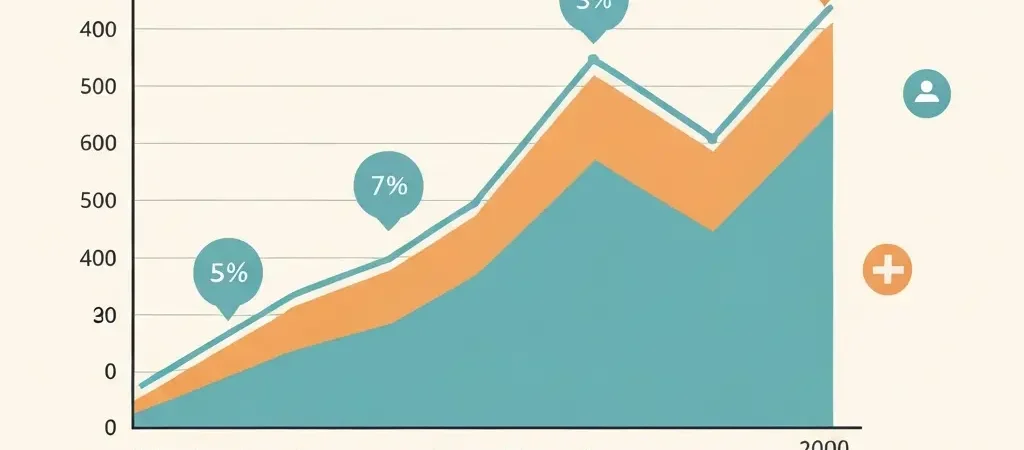
Marketing Automation Adoption Rates 2026: What the Data Shows
Marketing automation adoption rates in 2026 reveal a technology that has crossed the mainstream threshold — used by more than half of all B2B companies globally and growing fastest in the SMB segment where the tools have become most accessible. The 2026 data shows not just who is using automation, but what they’re automating, how their investments are performing, and where adoption gaps remain.
This report draws from primary research including Salesforce’s State of Marketing 2025, HubSpot’s Marketing Report 2025, Gartner’s Marketing Technology Survey, and Statista’s marketing automation database.
Overall Adoption Rates
- 56% of B2B companies use marketing automation — Salesforce State of Marketing 2025
- 67% of marketing professionals use at least one form of marketing automation — HubSpot Marketing Report 2025
- 78% of high-performing marketing teams use marketing automation, vs. 38% of underperformers — HubSpot
- 91% of marketing automation users consider it important or very important to their marketing success — Ascend2
- 3-year adoption growth: from 38% in 2020 → 47% in 2022 → 56% in 2025 — Salesforce longitudinal data
Adoption by Company Size
| Company Size | Adoption Rate | YoY Change | Primary Platform Type |
|---|---|---|---|
| Enterprise (1,000+ employees) | 82% | +3% | Marketo, HubSpot Enterprise, Salesforce |
| Mid-market (100-999 employees) | 61% | +5% | HubSpot Pro, ActiveCampaign, Klaviyo |
| SMB (10-99 employees) | 43% | +8% | Mailchimp, Brevo, CampaignOS, ActiveCampaign |
| Micro-business (under 10 employees) | 27% | +11% | Mailchimp, Brevo, CampaignOS |
The micro-business and SMB segments show the fastest adoption growth — driven primarily by free and open-source platforms eliminating the cost barrier that previously made automation inaccessible for small teams. CampaignOS is part of this shift, bringing enterprise-grade automation to organizations that previously couldn’t justify the cost.
Adoption by Industry
| Industry | 5-Year Trend | |
|---|---|---|
| Software / SaaS | 74% | Rapid growth (from 52% in 2020) |
| E-commerce / Retail | 68% | Rapid growth (from 45% in 2020) |
| Financial Services | 65% | Steady growth |
| B2B Professional Services | 61% | Steady growth |
| Healthcare | 48% | Moderate growth (compliance constraints) |
| Education | 44% | Accelerating in 2024-2026 |
| Manufacturing | 38% | Slow but growing |
| Nonprofit | 35% | Growing with free platform availability |
Adoption by Region
| Region | Adoption Rate | Notable Trend |
|---|---|---|
| North America | 68% | Highest absolute adoption; mature market |
| Western Europe | 61% | GDPR driving preference for self-hosted tools |
| Asia-Pacific | 54% | Fastest absolute growth; mobile-first automation |
| Latin America | 42% | Growing rapidly with local-language platforms |
| Middle East / Africa | 31% | Emerging adoption; highest growth potential |
What Is Being Automated?
Among businesses using marketing automation, these are the most commonly automated functions:
- Email campaigns and sequences — 89% of automation users (the near-universal starting point)
- Lead nurturing workflows — 53%
- Social media scheduling — 58%
- List segmentation and tagging — 51%
- Lead scoring — 45%
- CRM data updates — 43%
- Abandoned cart recovery — 41% (among e-commerce businesses)
- Post-purchase sequences — 38%
- Multi-channel coordination (email + SMS + push) — 29%
- Content personalization — 27%
The 29% multi-channel automation figure is the most significant growth area — up from 17% in 2022. As platforms like CampaignOS make multi-channel automation available beyond enterprise pricing, this number is projected to exceed 45% by 2027. The automation-first approach is spreading beyond marketing — tools like Authenova for SEO content and iQuitNow for behavioral health coaching illustrate how automation principles are transforming adjacent fields.
What Are the Barriers to Adoption?
Among businesses not yet using marketing automation, the most commonly cited barriers are:
| Barrier | % Citing as Primary Barrier | Reality in 2026 |
|---|---|---|
| Cost | 34% | Free options (CampaignOS, Brevo) eliminate this barrier |
| Complexity/setup time | 28% | Modern platforms reduce setup to hours, not weeks |
| Lack of qualified leads to automate | 18% | Valid; automation amplifies existing lead volume, not replaces it |
| Data/content not ready | 14% | Valid; requires email content and customer journey definition first |
| Concerns about impersonal feeling | 6% | Properly implemented automation feels more personal, not less |
Frequently Asked Questions
What percentage of small businesses use marketing automation in 2026?
Approximately 43% of small businesses (10-99 employees) use marketing automation in 2026, up from 31% in 2022 (Salesforce State of Marketing). Micro-businesses (under 10 employees) have lower adoption at 27%, but this segment shows the fastest growth rate (+11% year-over-year) driven by free platforms like Brevo and open-source alternatives like CampaignOS eliminating cost barriers.
How has marketing automation adoption changed in the past 5 years?
B2B marketing automation adoption has grown from 38% in 2020 to 56% in 2025 — a 47% increase in adoption over 5 years. The growth has been driven by: free tier availability from major SaaS platforms, open-source self-hosted options, AI features reducing setup complexity, and the documented ROI evidence that made the business case undeniable. The fastest growth period was 2020-2022 (COVID-driven digital acceleration).
What country has the highest marketing automation adoption?
The United States has the highest absolute marketing automation adoption rate at approximately 73% of B2B companies. Among regions, North America overall leads at 68%. The UK, Netherlands, and Germany have the highest European adoption rates. Australia and Singapore lead adoption in the Asia-Pacific region. Latin American adoption is growing fastest proportionally, from a lower base.
Why is marketing automation adoption lower in healthcare?
Healthcare adoption (48%) is constrained by regulatory compliance requirements — HIPAA in the US and equivalent regulations in other regions place strict requirements on how patient and prospective patient data can be collected, stored, and used for marketing. Self-hosted platforms (which can be deployed within compliant infrastructure) are growing in adoption among healthcare organizations, but the compliance overhead slows overall adoption compared to unregulated industries.
What is the most commonly automated marketing task?
Email campaigns and sequences are the most commonly automated marketing task, used by 89% of marketing automation users. Welcome sequences and lead nurture drips are typically the first automations businesses implement. Social media scheduling (58%) is a close second. Multi-channel automation (email + SMS + push) at 29% is the fastest-growing automation category in 2025-2026.
Join the 56% — and the 78% Who Outperform
CampaignOS is the open-source platform that high-performing marketing teams use to build automation systems that generate the ROI this data describes. Free to start, unlimited to scale.