Multi-Channel Marketing Platform: How to Choose and Build the Right Stack in 2026
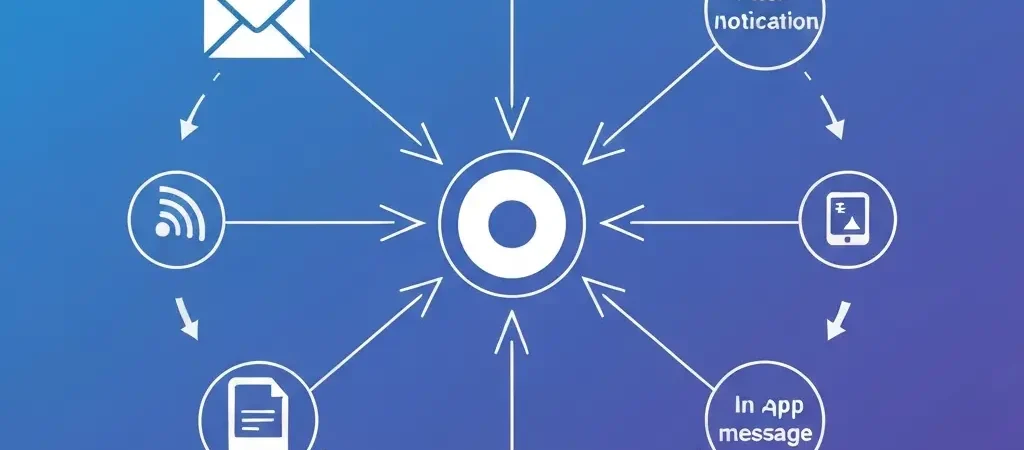
Every marketer knows that customers don’t live on one channel. They read emails on the weekend, check SMS within minutes, encounter push notifications throughout the day, and engage with in-app messages during active sessions. The promise of a multi-channel marketing platform is simple: reach customers where they are, consistently, with messages that are relevant to each channel’s context.
The reality is more complicated. Most “multi-channel” platforms bolt together separate tools that don’t share a unified data model — meaning your email engagement doesn’t inform your SMS targeting, your push notifications don’t know whether the user already responded to an email, and your analytics report five different versions of the same customer journey. The result is expensive duplication and fractured attribution.
In 2026, the right approach is either a genuinely unified platform (one system across all channels) or a tightly integrated stack built on shared infrastructure. This guide walks through how to evaluate the difference, what features actually matter, and what the best platforms deliver.
Why Multi-Channel Marketing Works
The data on multi-channel effectiveness is consistent and compelling:
- Omnichannel shoppers outspend single-channel buyers — 4% more in-store and 10% more online
- 88% of marketers who rated multi-channel marketing rated it as important or highly important (GetApp survey, 2026)
- 78% of companies now use AI in at least one function to enable omnichannel experiences
- Automated cross-channel workflows generate up to 30x more revenue per recipient than single-channel broadcasts
The mechanism behind these numbers: different channels work better at different moments in the customer journey and different message types. Email delivers long-form content effectively. SMS achieves near-instant read rates (90% within 3 minutes). Push notifications capture attention during active sessions. In-app messages provide contextual guidance when users are actively engaged. A platform that can orchestrate all four delivers messages in the right format, at the right moment, in the right channel — which is fundamentally what personalization means at scale.
True Multi-Channel vs Stitched-Together Tools
There is a meaningful technical difference between a platform built as a unified multi-channel system and a collection of single-channel tools integrated via APIs.
The Problem with Stitched-Together Stacks
When you connect separate email, SMS, and push tools via Zapier or webhooks, you get:
- Data fragmentation: Each tool maintains its own contact records. Updates made in one don’t automatically propagate to others. Unsubscribes in email don’t suppress SMS sends.
- Attribution problems: When a customer receives three messages across three platforms and converts, which channel gets credit? Each platform claims the conversion, and your attribution model is corrupted.
- Frequency cap failures: There’s no global view of how many messages a customer has received across all channels this week. Over-communication is almost guaranteed.
- Operational overhead: Managing multiple platforms means multiple dashboards, multiple billing relationships, multiple support contacts, and multiple learning curves.
What Genuine Unification Looks Like
A genuinely unified multi-channel platform shares:
- One contact record: Email engagement, SMS responses, push notification interactions, and in-app behavior all feed a single customer profile.
- Shared segmentation: Segments built on multi-channel behavior — “clicked email AND viewed pricing page AND hasn’t responded to push in 7 days” — drive more precise targeting than any single-channel tool can provide.
- Cross-channel automation logic: “Send email, wait 24 hours, if not opened send SMS, if not responded suppress push for 7 days” — these cross-channel conditional sequences require a unified data model.
- Unified analytics: One dashboard showing customer journey across all channels, with de-duplicated conversion attribution.
Key Features That Actually Matter
Not all “multi-channel” platform features deliver equal value. These are the capabilities that separate platforms worth buying from feature-list decoration:
Journey Orchestration with Cross-Channel Conditions
The automation builder must support conditional branching based on cross-channel behavior. “If the customer opened the email, suppress the SMS” requires the platform to share engagement data between channel engines in real time. Many platforms claim this but implement it with 24-48 hour delays — which is not real-time orchestration.
Global Frequency Caps
A global frequency cap prevents any customer from receiving more than N messages per day or week, across all active automations and channels. Without this, a customer enrolled in three simultaneous automation workflows (onboarding, re-engagement, and a promotional campaign) could receive 9 messages in a single day. Global frequency caps are a maturity indicator — look for them explicitly.
Behavioral Event Ingestion
The platform must accept behavioral events from external systems: your product, website, ecommerce platform, CRM. This is what powers behavioral triggers (vs time-based triggers). Evaluate the event ingestion API, the supported event types, and whether event data is available for segmentation in near-real-time.
Unified Analytics and Attribution
Look for: last-touch, first-touch, and multi-touch attribution models. Channel contribution reporting. Journey visualization showing where customers move between channels. Revenue attribution tied to campaign interactions. Gartner estimates that poor data quality costs $12.9 million per company annually — and attribution built on fragmented multi-tool data is a significant source of that cost.
Platform Options Compared
CampaignOS — Best Open-Source Multi-Channel Platform
CampaignOS is built from the ground up as a unified multi-channel marketing automation platform. Email, SMS, push notifications, and in-app messaging share a single customer data model, a single automation builder, and a single analytics dashboard. Cross-channel automation conditions are native — not patched in via webhooks. The platform is open-source and self-hostable, making it the strongest option for teams that want full data ownership alongside genuine multi-channel capability.
Best for: Growth teams, SaaS companies, and agencies that need true multi-channel orchestration without enterprise-tier pricing.
Braze
Braze is the enterprise benchmark for multi-channel customer engagement — email, SMS, push, in-app, web, and more, with genuine real-time data and sophisticated journey orchestration. It is genuinely excellent. It is also priced for enterprise: expect $50,000-200,000+/year for mid-to-large implementations. For teams whose budget allows it and whose scale justifies it, Braze is the reference implementation of what multi-channel should look like.
Iterable
Iterable focuses on cross-channel marketing with strong data orchestration and AI-driven journey personalization. It excels in real-time data ingestion and behavioral segmentation. Pricing is mid-market enterprise, starting around $500/month and scaling significantly with volume. Strong for ecommerce and SaaS with complex user journeys.
Klaviyo
Klaviyo’s multi-channel coverage (email, SMS, push) is strong for ecommerce use cases. Its deep Shopify integration and purchase-data-driven segmentation make it the leading choice for ecommerce brands. Outside of ecommerce, its multi-channel flexibility is more limited than Braze or CampaignOS.
Brevo
Brevo covers email, SMS, WhatsApp, chat, and push in an accessible package starting at $25/month. Multi-channel coordination is functional but limited — the automation builder doesn’t support sophisticated cross-channel conditional logic. Best for SMBs doing basic multi-channel campaigns without complex journey requirements.
How to Choose the Right Platform
Use this decision framework:
- Define your channels: Which channels do you currently use or plan to use? Email only? Email + SMS? All four (email, SMS, push, in-app)? Your required channel coverage eliminates most single-channel or email-primary tools.
- Define your automation sophistication: Do you need basic drip sequences, or complex behavioral journeys with cross-channel conditions? Higher sophistication requirements narrow the field significantly.
- Set your data ownership position: Do you need self-hosting for GDPR, privacy, or cost reasons? This narrows to open-source options (CampaignOS, Mautic).
- Assess your budget ceiling: Sub-$500/month: Brevo or CampaignOS (self-hosted). $500-5,000/month: Klaviyo, Iterable at small scale. $5,000-50,000+/month: Braze, Salesforce Marketing Cloud.
- Evaluate attribution requirements: Complex multi-touch attribution needs a platform with strong analytics or a dedicated attribution tool alongside it.
For teams integrating their multi-channel marketing platform with an SEO content operation, Authenova’s content marketing automation tools guide covers how to connect content production workflows with campaign triggers.
Frequently Asked Questions
What is a multi-channel marketing platform?
A multi-channel marketing platform enables businesses to plan, execute, and analyze marketing campaigns across multiple communication channels — typically email, SMS, push notifications, in-app messaging, and sometimes social and paid ads — from a single system. True multi-channel platforms share a unified customer data model across channels, enabling coordinated campaigns and accurate attribution.
What’s the difference between multi-channel and omnichannel marketing?
Multi-channel marketing uses multiple channels to reach customers — email, SMS, social, etc. Omnichannel marketing adds seamless coordination: the experience is consistent and continuous across channels, with each channel aware of the customer’s interactions on other channels. Omnichannel is the goal; multi-channel is the prerequisite. A unified data model enabling cross-channel coordination is the technical requirement that bridges the two.
Is CampaignOS a true multi-channel platform?
Yes. CampaignOS natively supports email, SMS, push notifications, and in-app messaging from a single unified platform — with shared contact records, cross-channel automation logic, and centralized analytics. This is genuine multi-channel architecture, not disparate tools connected via webhooks. It is also open-source and self-hostable, which distinguishes it from enterprise SaaS alternatives.
How much does a multi-channel marketing platform cost?
Costs range dramatically: CampaignOS (self-hosted, open-source) costs $10-50/month in infrastructure. Brevo starts at $25/month. Klaviyo scales from $45/month to thousands. Iterable and Braze are enterprise-priced from $500-$200,000+/year depending on volume and features. For most teams, the choice is between CampaignOS (self-hosted, full features, near-zero cost) and a SaaS alternative in the $50-500/month range.
True Multi-Channel Marketing — Open-Source, No Vendor Lock-In
CampaignOS delivers genuine multi-channel orchestration across email, SMS, push, and in-app messaging. One platform, one contact record, one analytics dashboard — and the freedom of open-source.