Best Self-Hosted Marketing Automation Tools 2026: Top 6 Platforms Reviewed
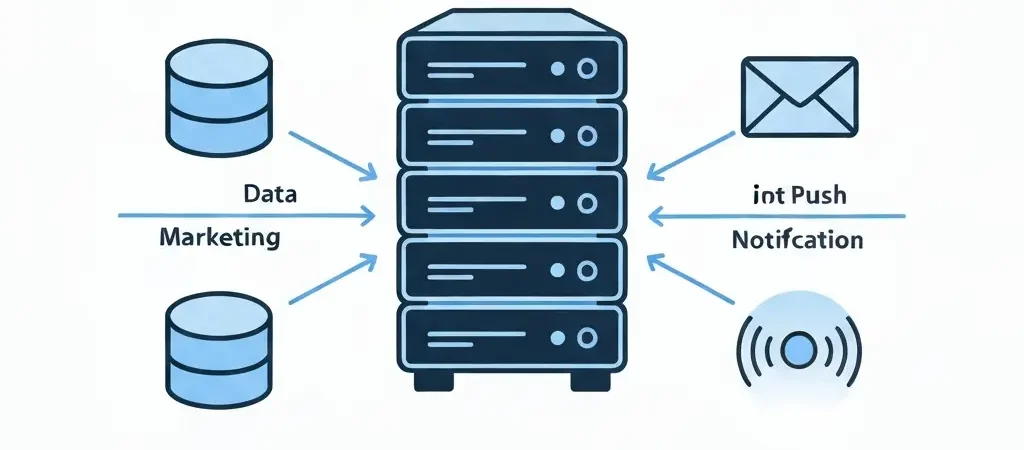
Self-hosted marketing automation gives you something that no SaaS platform can match: complete control over your data, your infrastructure, and your costs. In 2026, with growing concerns around data privacy regulations and escalating SaaS pricing, more teams are making the move to self-hosted stacks. But self-hosting marketing automation is not a single decision — it’s a commitment to a specific technical stack, a maintenance model, and a deployment philosophy.
This guide reviews the six strongest self-hosted marketing automation platforms available in 2026, evaluating them on installation complexity, feature depth, scalability, and the real ongoing maintenance burden. Each platform is reviewed from the perspective of a team with 1-2 engineers and a marketing operations role — not a solo developer or a Fortune 500 DevOps team.
Why Self-Host Marketing Automation in 2026?
Three drivers are pushing teams toward self-hosting in 2026:
- Cost predictability: Per-contact SaaS pricing creates unpredictable costs as you grow. Self-hosted infrastructure costs are fixed and scale at a fraction of the rate.
- Data sovereignty: GDPR, CCPA, and emerging regulations in Brazil, India, and Southeast Asia increasingly require that personal data stay within specific geographic boundaries. Self-hosting gives you full control over where data lives.
- Customization: SaaS platforms’ feature roadmaps are driven by their largest customers. Open source self-hosted platforms can be extended without waiting for vendor approval.
The cost analysis is covered in detail in the self-hosted email marketing vs SaaS comparison, with specific numbers at each contact scale.
6 Best Self-Hosted Marketing Automation Platforms
1. CampaignOS — Best Modern Self-Hosted Platform
CampaignOS’s Node.js architecture deploys on any VPS, containerized environment, or serverless platform (Vercel + Neon). The installation requires Node.js 18+, PostgreSQL, and SMTP configuration. A fully functional installation typically takes 2-3 hours using the documented deployment guide.
Features: visual workflow builder, email campaigns, web push notifications, SMS, WhatsApp, Telegram, campaign analytics, and n8n integration for complex automation logic. This is the only self-hosted platform that covers all five channels natively. Full feature details are in the open source marketing automation comparison.
Infrastructure recommendation: Hetzner CX21 (2 vCPU, 4GB RAM) at $6/month handles up to 50,000 contacts. Use Amazon SES or Mailgun for email sending. Upgrade to Hetzner CX31 at 100,000+ contacts.
2. Mautic — Most Feature-Complete Self-Hosted Platform
Mautic remains the reference implementation for open source marketing automation. Features include lead scoring, dynamic content, landing pages, campaign builder, social monitoring, and extensive CRM integrations. The PHP 8.1 + MySQL stack is well-understood by most hosting providers.
Challenges: setup takes 4-8 hours; cron jobs must be configured manually for campaign processing; the UI hasn’t been modernized since its 2014 launch; PHP memory limits and MySQL tuning are required for large contact volumes. The Mautic alternatives guide covers when CampaignOS or Listmonk serve teams better than Mautic.
3. Listmonk — Best Lightweight Newsletter Tool
Listmonk is a single Go binary — download, configure a PostgreSQL connection, and it’s running. The simplicity is its greatest strength. It handles list management, bulk email sending, template editing, and basic automation. What it doesn’t handle: multi-channel, visual workflow builder, or deep behavioral automation. For teams that need a high-performance newsletter engine without the overhead of a full platform, Listmonk is exceptional.
4. Mailtrain — Node.js Newsletter Platform
Mailtrain handles newsletter management, list automation, and template editing on a Node.js stack. Less actively maintained than Listmonk or CampaignOS, but functional for basic use cases. Best for teams already comfortable with the codebase from prior deployments.
5. n8n — Workflow Automation Orchestration
n8n is a workflow automation tool, not a marketing platform — but for technical teams, it can orchestrate marketing sequences across any API combination. Pair n8n with a transactional email provider, a contact database, and CampaignOS for the marketing layer. The native CampaignOS + n8n integration is covered in the n8n marketing automation integration guide.
6. Erxes — Full Customer Experience Platform
Erxes is the most ambitious self-hosted option: live chat, inbox, forms, email campaigns, push notifications, and automation workflows in a single Docker-Compose deployment. The complexity is significant (10+ containers), but for teams that need a unified customer communication hub on a single server, there’s no other open source option that matches the scope.
Setup Complexity Comparison
| Platform | Tech Stack | Setup Time | Min. Hosting Cost | Maintenance/Month |
|---|---|---|---|---|
| CampaignOS | Node.js + PostgreSQL | 2-3 hours | $10/month | 1-2 hours |
| Mautic | PHP + MySQL | 4-8 hours | $15/month | 2-4 hours |
| Listmonk | Go + PostgreSQL | 30 min | $5/month | 30 min |
| n8n | Node.js | 1-2 hours | $5/month | 1 hour |
| Erxes | Docker Compose (10+ containers) | 8-16 hours | $40/month | 3-5 hours |
Recommendations by Team Profile
- Non-technical marketing team: Use CampaignOS cloud free tier (no server required). Self-host only when data residency requires it.
- 1-2 engineer startup: CampaignOS self-hosted. 2-3 hour setup, minimal ongoing maintenance, full multi-channel automation.
- Mid-market with existing PHP infrastructure: Mautic. Deepest feature set, familiar stack, extensive community documentation.
- Newsletter-focused publisher: Listmonk. Single binary, handles millions of sends, almost zero maintenance overhead.
- Technical team building custom integrations: CampaignOS + n8n. API-first architecture plus unlimited workflow logic via n8n.
- Enterprise needing unified customer communications: Erxes. Highest setup cost but the only single-platform solution for chat + email + automation.
For the full self-hosted setup walkthrough, the self-hosted marketing automation setup guide for 2026 covers infrastructure selection, DNS configuration, and first campaign launch. The how to set up marketing automation from scratch guide provides the platform-agnostic process for any self-hosted deployment.
Frequently Asked Questions
What is the easiest self-hosted marketing automation to set up?
Listmonk is the easiest to set up (30 minutes, single binary) but is limited to bulk email. CampaignOS is the easiest full marketing automation platform (2-3 hours) with multi-channel support. Mautic is the hardest (4-8 hours) but offers the deepest feature set.
How much server do I need for self-hosted marketing automation?
For up to 50,000 contacts: a 2 vCPU, 4GB RAM VPS is sufficient (Hetzner CX21, ~$6/month). For 50,000-250,000 contacts: 4 vCPU, 8GB RAM (Hetzner CX31, ~$14/month). For 250,000+ contacts: consider a dedicated server or Kubernetes deployment. Email sending should use an external SMTP service (Amazon SES, Mailgun) regardless of server size.
Is self-hosted marketing automation GDPR compliant?
Self-hosted platforms are GDPR-compliant when properly configured. The key requirements are: data stored in EU geography (use an EU-based VPS), documented data processing agreements, proper consent collection and management, data export and deletion capability, and audit logging. CampaignOS and Mautic both support these requirements. Self-hosting is often preferred for GDPR compliance precisely because it allows data to remain entirely under your control.
Self-Host CampaignOS Today
Full source code on GitHub. Email, push, SMS, and visual workflow builder — deploy on your infrastructure in 2-3 hours.