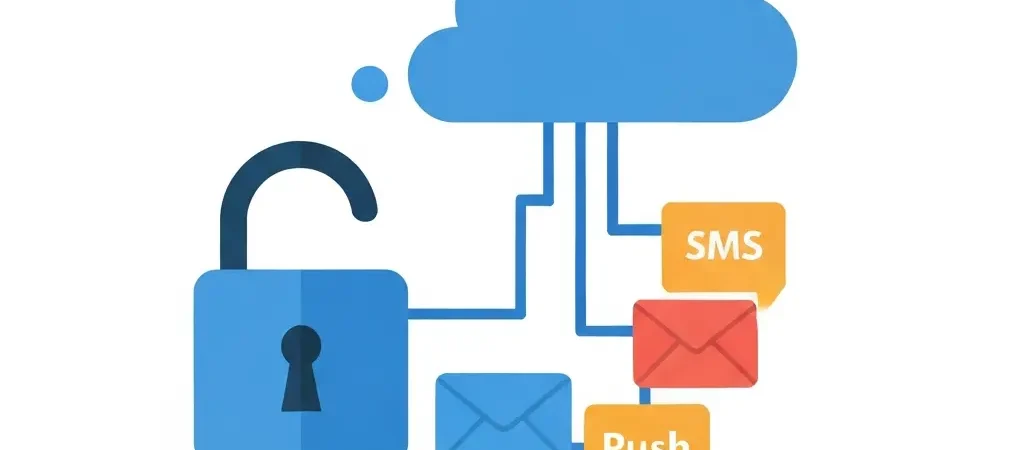
Best Brevo Alternative Open Source in 2026: 8 Tools Compared
Brevo (formerly Sendinblue) is a popular marketing automation platform with a generous free tier and solid multi-channel capabilities. But teams searching for a Brevo alternative in 2026 — specifically one that’s open-source and self-hostable — typically have one of three concerns: they need data residency control that cloud-only SaaS can’t provide, they’ve hit Brevo’s automation limits on the free plan, or they want to eliminate per-email/per-SMS costs entirely by owning their sending infrastructure.
This guide compares the 8 best open-source and free Brevo alternatives, with honest assessments of what each tool does well and where Brevo still holds advantages.
Brevo in 2026: What It Gets Right and Wrong
Brevo’s strengths are genuine and worth acknowledging:
- Unlimited contacts on all plans — unlike Mailchimp’s contact-based billing.
- Email-volume-based pricing (pay for sends, not contacts) — more predictable for high-contact-count, low-frequency senders.
- Native SMS, WhatsApp, and push notification channels.
- Decent transactional email API.
- Free tier includes 300 emails/day.
Where Brevo falls short:
- Not open-source. No self-hosting. Data lives on Brevo’s servers.
- Automation on the free plan is limited to one workflow per campaign.
- Advanced automation (A/B testing workflows, advanced scoring) requires Business plan ($65/month).
- Limited CRM functionality — it’s a marketing tool, not a full marketing automation platform.
- WhatsApp and SMS costs are on top of plan fees.
Comparison: Brevo vs Open-Source Alternatives
| Platform | Open Source | Self-Host | Multi-Channel | Automation | Cost |
|---|---|---|---|---|---|
| CampaignOS | Yes (MIT) | Yes | Email, SMS, Push | Visual builder + n8n | Free |
| Brevo | No | No | Email, SMS, WhatsApp, Push | Good (paid) | Free–$65+/mo |
| Mautic | Yes (GPL) | Yes | Email (SMS via plugin) | Strong | Free + server |
| Listmonk | Yes (AGPL) | Yes | Email only | Minimal | Free + server |
| Erxes | Yes (AGPL) | Yes | Email, SMS, Push | Marketing + CRM | Free + server |
| phpList | Yes (AGPL) | Yes | Email only | Basic | Free + server |
| MailerLite | No | No | Email only | Good | Free–$9+/mo |
| Omnisend | No | No | Email, SMS, Push | Strong (ecom) | Free–$16+/mo |
1. CampaignOS — Best Open-Source Brevo Alternative
Best for: Teams that want Brevo’s multi-channel capabilities with open-source control and no per-message fees.
CampaignOS is the most direct open-source replacement for Brevo’s core marketing automation capabilities. Email, SMS, and push notifications are all native — matching Brevo’s multi-channel reach. The visual workflow builder handles the automation complexity that Brevo gates behind paid plans. And the self-hosting option gives teams full data ownership — critical for GDPR, HIPAA, or data residency requirements.
Where Brevo still wins: WhatsApp integration is native in Brevo; CampaignOS requires a webhook/n8n integration for WhatsApp. Brevo also has a more polished transactional email API for developers building notification systems.
See the head-to-head CampaignOS vs Brevo comparison for the full breakdown. To understand the self-hosting setup, read our guide on whether self-hosted marketing automation is worth it.
2. Mautic — Best Open-Source for Advanced Automation
Best for: Teams that need deeper CRM and automation than Brevo offers, and have technical resources.
Mautic goes significantly further than Brevo on automation depth and CRM functionality. Lead scoring, complex campaign branching, custom fields, and sales pipeline features are built in. The trade-off is the setup complexity Mautic requires vs Brevo’s plug-and-play SaaS experience.
3. Listmonk — Best for Newsletter Sending Volume
Best for: Teams that use Brevo primarily for bulk newsletter sending and want maximum throughput at minimal cost.
Listmonk is a single-binary Go app that can handle millions of subscribers with minimal server resources. Paired with Amazon SES ($0.10/1,000 emails), it’s the cheapest possible high-volume newsletter solution. It doesn’t replicate Brevo’s automation or multi-channel features, but for pure sending at scale, it outperforms Brevo in cost efficiency.
4. Erxes — Open-Source Multi-Channel Platform
Best for: Teams that want to replace Brevo and a CRM/support tool simultaneously with one open-source platform.
Erxes covers marketing automation, CRM, customer support, and team inbox — making it a broader replacement than Brevo. Its multi-channel support includes email, SMS, and push. The setup complexity (Docker-based) is significant, but teams that invest in it get a genuinely comprehensive open-source alternative to an entire SaaS stack.
5. phpList — Veteran Open-Source Newsletter Tool
phpList has been in development since 2000 and remains a stable option for self-hosted email newsletter management. It lacks Brevo’s modern features but handles large list management reliably on any PHP/MySQL server. Suitable for organizations with legacy PHP infrastructure that need a dependable free sending platform.
6. Postal — Open-Source Mail Server Infrastructure
Postal isn’t a Brevo equivalent — it’s an open-source mail server (MTA) and API that provides the sending infrastructure layer. Teams that want complete control over their email delivery infrastructure use Postal as the foundation, then layer a campaign management tool (like CampaignOS) on top. It’s for teams that want to own the entire stack, not just the campaign UI.
7. MailerLite — Best Freemium for Non-Technical Teams
MailerLite isn’t open-source, but its free tier (1,000 contacts, 12k emails/month) and modern UI make it the most accessible Brevo replacement for non-technical teams. Automation is solid for basic drip sequences. The limitation is email-only — no SMS or push without third-party tools.
8. Omnisend — Best Ecommerce Multi-Channel Alternative
For ecommerce teams that use Brevo’s SMS and push features for cart abandonment and post-purchase flows, Omnisend is the strongest freemium replacement. Its ecommerce integrations and automation templates are purpose-built for Shopify and WooCommerce workflows. Free tier includes 500 emails/month with automation.
For context on the broader marketing automation landscape, see marketing automation market size and growth data for 2026.
Frequently Asked Questions
Is there a self-hosted alternative to Brevo?
Yes. CampaignOS, Mautic, Listmonk, and Erxes are all self-hostable open-source alternatives to Brevo. CampaignOS is the most feature-comparable to Brevo’s multi-channel marketing automation, with email, SMS, and push notifications native to the platform.
What is the main advantage of open-source over Brevo?
Open-source alternatives to Brevo offer full data ownership (no third-party cloud), no per-email or per-SMS usage fees beyond infrastructure costs, the ability to customize the platform code, and GDPR compliance through data residency control. For teams sending high volumes, the cost savings are substantial.
Does CampaignOS support SMS like Brevo?
Yes. CampaignOS supports SMS natively as a campaign channel. You connect your own SMS provider (Twilio, Vonage, or similar), which gives you control over per-message costs rather than paying Brevo’s markup on SMS sends.
Is Brevo or CampaignOS better for GDPR compliance?
Both platforms support GDPR compliance. CampaignOS has an advantage for strict data residency requirements — as a self-hosted platform, your contact data never leaves your own infrastructure. Brevo is GDPR-compliant as a cloud service but data is stored on their servers in EU data centers.
What does Brevo offer that open-source tools don’t?
Brevo’s key advantages over open-source alternatives: native WhatsApp Business API integration, a polished transactional email API for developers, managed email deliverability infrastructure, and a no-setup-required SaaS experience. For teams without technical resources to manage servers, Brevo’s plug-and-play model has real value.
Own Your Marketing Stack — For Free
CampaignOS is the open-source Brevo alternative with email, SMS, and push notifications built in. Self-host for full data control or use the cloud version — always free.