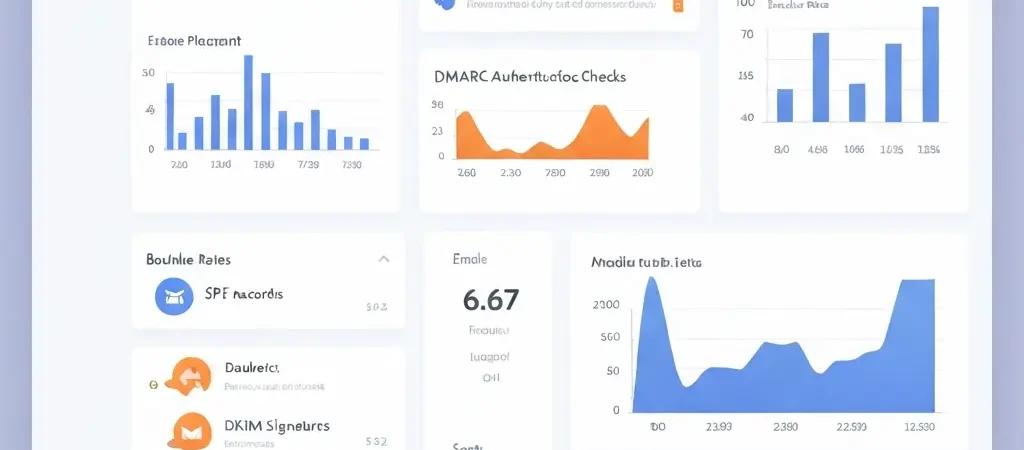
Email Deliverability Monitoring Tools Compared: The 2026 Guide to Inbox Placement
Your email campaign could be brilliantly written, perfectly segmented, and sent at the optimal time — and still fail completely if it lands in spam. Email deliverability monitoring tools exist to prevent exactly that outcome. They track your sender reputation, flag authentication failures, alert you when you hit a blacklist, and give you the data to fix deliverability issues before they kill your campaigns.
In 2026, with Gmail and Yahoo tightening inbox placement requirements and spam filters becoming more sophisticated, deliverability monitoring has shifted from nice-to-have to critical infrastructure. This guide compares the leading tools on criteria that actually matter: feature depth, DMARC/SPF/DKIM monitoring, blacklist coverage, pricing, and integration with modern marketing automation stacks.
Why Deliverability Monitoring Matters in 2026
In February 2024, Google and Yahoo introduced new bulk sender requirements: DMARC authentication, one-click unsubscribe, and spam rate limits below 0.3%. These are now enforced. In 2026, Microsoft Outlook followed with enhanced Sender Reputation scoring. The practical consequence: a single deliverability problem — a blacklisted IP, a failed DKIM record, a spike in spam complaints — can overnight move your entire sending domain into the promotions folder or spam.
According to research compiled by Email Vendor Selection, the average email programme loses 20–30% of its potential reach to deliverability issues, most of which are preventable with monitoring. That is not a minor inefficiency — it is the difference between a campaign that works and one that does not.
What These Tools Actually Monitor
Five dimensions of deliverability any serious monitoring tool should address:
- Authentication records: SPF, DKIM, and DMARC configuration and validity
- Blacklists: Whether your sending IP or domain appears on major block lists (Spamhaus, Barracuda, SORBS, UCEPROTECT)
- Inbox placement: Where emails actually land across major providers (Gmail, Outlook, Yahoo, Apple Mail)
- Sender reputation: Your IP/domain reputation score with major ISPs
- Content analysis: Whether your email content triggers spam filters before you send
Not every tool covers all five categories. The right choice depends on which gaps are most critical for your sending situation. This connects directly to the foundational setup covered in our email deliverability setup guide.
The 7 Best Email Deliverability Monitoring Tools
1. MXToolbox
Best for: Free blacklist monitoring and DNS diagnostics
MXToolbox is the industry standard for quick, free deliverability checks. Its blacklist monitoring covers 100+ blacklists, it provides real-time alerts when your IP or domain is listed, and its DNS lookup tools are the go-to for diagnosing SPF and DKIM issues.
Pricing: Free tier available; paid plans from $19/month
Limitation: No inbox placement testing
2. GlockApps
Best for: Inbox placement testing across multiple providers
GlockApps is the most comprehensive inbox placement testing tool at its price point. You send a test email to their seed accounts and get a detailed report showing where it lands at Gmail, Outlook, Yahoo, and Apple Mail. It also provides spam filter analysis and a content scoring report.
Pricing: From $59/month (250 tests); pay-per-test option available
Standout feature: Real inbox placement data (not estimates) across 80+ email clients
3. Folderly
Best for: Sales teams and cold email senders needing warm-up and monitoring
Folderly combines email warm-up with ongoing monitoring and offers GDPR/CCPA-compliant monitoring with advanced DNS record analysis and real-time spam alerts.
Pricing: From $120/month per mailbox
Standout feature: Integrated warm-up + monitoring in one platform
4. ZeroBounce
Best for: Enterprise senders needing list validation and deliverability combined
ZeroBounce combines email list validation with deliverability monitoring. Its blacklist monitoring, inbox placement testing, and DMARC analysis are enterprise-grade. SOC 2, GDPR, and PCI compliant.
Pricing: Deliverability monitoring from $49/month
Standout feature: Combined list hygiene and deliverability in one platform
5. Mailtrap
Best for: Development and staging environments plus production monitoring
Mailtrap is notable for its testing-first design: validate email workflows in staging without risking real deliverability. Its production monitoring has matured significantly. Mailtrap’s 2026 deliverability tools roundup provides excellent benchmarks for the category.
Pricing: Free for testing; production sending from $15/month
6. Smartlead
Best for: Cold email outreach at scale
Smartlead provides deliverability tools including CNAME, SPF, DMARC checkers, and email verification alongside its outreach platform. Trusted by over 31,000 businesses and integrates with n8n for automation workflows.
Pricing: From $39/month
7. Postmark
Best for: Transactional email senders needing built-in monitoring
Postmark’s infrastructure is built around maintaining high inbox placement for transactional email. Their SMTP service includes built-in monitoring, bounce management, and detailed delivery statistics.
Pricing: From $15/month (10,000 emails)
Side-by-Side Comparison Table
| Tool | Blacklist | Inbox Test | DMARC | Starting Price | Best Use Case |
|---|---|---|---|---|---|
| MXToolbox | 100+ lists | No | Yes | Free / $19/mo | DNS + blacklist |
| GlockApps | Yes | 80+ clients | Yes | $59/mo | Inbox placement |
| Folderly | Yes | Yes | Yes | $120/mo/mailbox | Cold email warm-up |
| ZeroBounce | Yes | Yes | Yes | $49/mo | Enterprise + list hygiene |
| Mailtrap | Yes | Yes | Yes | Free / $15/mo | Dev + production |
| Smartlead | Yes | Partial | Yes | $39/mo | Cold outreach + n8n |
Deliverability Monitoring for Self-Hosted Stacks
Self-hosted email senders face unique challenges. When sending from your own IP range rather than a managed ESP, you are responsible for your entire sender reputation with no platform reputation to fall back on. This makes monitoring even more critical.
Recommended monitoring stack for self-hosted senders:
- MXToolbox Monitor (free tier) for continuous blacklist monitoring with email alerts
- DMARC reports via a dedicated parser (dmarcian, DMARC Digest, or Report URI) to catch authentication failures
- GlockApps for quarterly inbox placement tests across major providers
- Google Postmaster Tools (free) for Gmail-specific reputation and spam rate data
This stack costs as little as $59/quarter for the GlockApps tests, with everything else free. See our self-hosted email marketing setup guide for the full configuration walkthrough.
Setting Up Deliverability Monitoring With CampaignOS
CampaignOS is built with deliverability-first design: every sending domain goes through DKIM signing, SPF validation is enforced at the domain connection stage, and DMARC policy guidance is provided in the setup flow.
To add external monitoring to your CampaignOS setup:
- Connect MXToolbox Monitor to your sending domain — set up alerts for any blacklist appearance
- Configure a DMARC reporting email address in your DNS and pipe reports to a parser
- Run a GlockApps inbox placement test before launching any major campaign to a cold list segment
- Monitor your spam complaint rate in CampaignOS analytics — keep it below 0.1% as a proactive threshold (Google enforces 0.3%)
For the full automation workflow including how to trigger deliverability checks before sends, see our n8n marketing automation integration guide. For GDPR compliance considerations affecting your deliverability, our GDPR compliant email marketing checklist covers the intersection of compliance and sender reputation.
Do It With CampaignOS
CampaignOS handles DKIM signing, bounce management, and spam rate monitoring out of the box — with built-in alerts when your deliverability metrics drift outside healthy ranges. The open-source architecture means you can integrate any monitoring tool in this list directly into your workflow. Get started free at CampaignOS and run email campaigns you know will actually reach your audience.
Frequently Asked Questions
What is a healthy email deliverability rate?
A healthy inbox placement rate is 95% or above. Spam complaint rates should stay below 0.1% (Google’s enforcement threshold is 0.3%). Bounce rates should be below 2%. If any of these metrics fall outside these ranges, immediate investigation and remediation is warranted before your next send.
How do I know if my IP is blacklisted?
Use MXToolbox’s free blacklist check at mxtoolbox.com/blacklists.aspx and enter your sending IP address. It checks against 100+ blacklists simultaneously. For ongoing monitoring, set up MXToolbox Monitor with email alerts so you are notified immediately if your IP appears on any list.
What is the difference between deliverability rate and inbox placement rate?
Deliverability rate measures whether your email was accepted by the receiving server (not bounced). Inbox placement rate measures whether it landed in the inbox vs spam. An email can have 99% deliverability but only 70% inbox placement — meaning 30% went to spam even though technically delivered. Both metrics matter, but inbox placement drives your actual campaign performance.
How often should I run inbox placement tests?
Run an inbox placement test before any major campaign to a new or inactive segment, whenever you change your email template significantly, when you see unexplained drops in open rates, and at least quarterly as a health check. For high-volume senders (1M+ emails/month), monthly testing is advisable.
Can GDPR compliance affect email deliverability?
Yes, directly. GDPR-compliant senders typically have better deliverability because their lists consist of confirmed opt-ins with genuine interest, producing lower spam complaint rates and higher engagement. Conversely, non-compliant practices (purchased lists, pre-ticked consent boxes) reliably produce the high complaint rates that damage sender reputation and inbox placement.