Multi-Channel Marketing Platform Best Practices for 2026
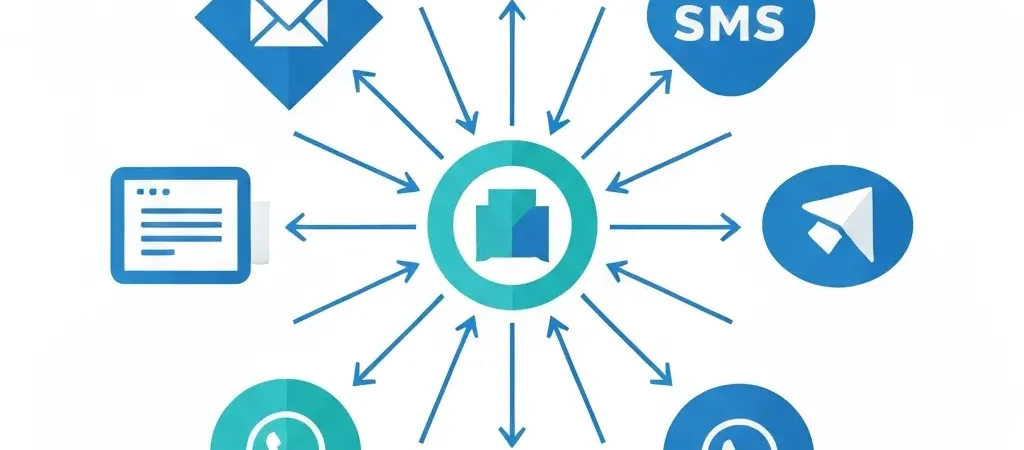
Running a multi-channel marketing platform is operationally harder than running a single-channel tool — not because the technology is more complex, but because the coordination challenges multiply with every channel you add. When you add a second channel, you have one coordination decision. When you add a fifth channel (email, push, SMS, WhatsApp, on-site), you have ten potential channel interaction pairs to manage. Most teams discover this complexity after they have already bombed a significant portion of their audience with duplicate messages on three channels in the same afternoon.
This guide is the operational playbook for teams who have chosen a multi-channel marketing platform and want to run it well. The principles apply regardless of whether you are using CampaignOS, Brevo, or a custom-assembled stack — the coordination challenges are inherent to multi-channel, not specific to any one platform.
The Channel Hierarchy Framework
Every message type has a natural primary channel. Assigning channel hierarchy before building any workflow prevents the ad hoc decisions that lead to channel saturation and audience fatigue.
| Message Type | Primary Channel | Fallback Channel | Do Not Use |
|---|---|---|---|
| Welcome / onboarding | In-app / on-site | SMS (too intrusive for new relationship) | |
| Transactional (receipt, confirmation) | SMS if no email | Push (not persistent enough) | |
| Urgent alerts (payment failure, security) | SMS + Email simultaneously | Push | WhatsApp for first contact |
| Promotional offers | Push (opted-in subscribers) | SMS (too intimate for promotional) | |
| Re-engagement | SMS (high-value contacts only) | Telegram/WhatsApp without prior opt-in | |
| Real-time feature updates | Push notifications | In-app | Email (too slow for real-time) |
Channel-Specific Best Practices
Email remains the highest-ROI channel in the multi-channel stack — but only when it is not over-used. The inbox is a competitive space. Reserve email for messages with substantive content (sequences, promotions, newsletters) and route lightweight notifications (status updates, reminders) to channels with lower attention cost.
The most overlooked email best practice in a multi-channel context: unsubscribing from email should not remove the contact from other channels unless they explicitly request it. Build separate opt-out flows per channel and respect them independently.
Push Notifications
Push notification permission rates are declining — iOS averages 44%, Android 68% — which makes every opted-in subscriber more valuable. Treat push as a premium channel: high-priority, time-sensitive, and brief. Keep push notification copy under 60 characters. Trigger only on events the user cares about (their content is ready, their team member took an action, a deadline is approaching). Every irrelevant push notification erodes trust and increases the chance of permission revocation.
SMS
SMS has the highest open rate of any channel (98% within three minutes) but the lowest tolerance for abuse. Contacts who feel their phone number was used inappropriately do not just unsubscribe — they complain, block, and sometimes report. Restrict SMS to high-priority transactional messages and opt-in promotional messages. Never use SMS for generic broadcast campaigns. Time your SMS sends to business hours in the recipient’s timezone.
WhatsApp and Telegram
WhatsApp Business API is the highest-engagement channel for markets where WhatsApp penetration is high (Brazil, India, much of Europe). Telegram is the developer community’s messaging preference. Both require explicit opt-in and benefit from conversational tone — they feel like person-to-person communication, and your messaging should reflect that. Template messages (for WhatsApp Business API) must be pre-approved; plan for 24–48 hour template approval cycles.
Frequency Capping and Fatigue Management
Frequency capping is the most important cross-channel coordination rule. Without it, a single contact can receive a welcome email, a push notification, an SMS, and a WhatsApp message on the same day simply because they entered four separate workflows that all fired their first message simultaneously.
Recommended frequency caps by channel:
- Email: Maximum 2–3 per week for promotional content; no cap for triggered transactional messages
- Push: Maximum 1–2 per day; 1 per hour for time-sensitive alerts
- SMS: Maximum 2–4 per month for promotional; no cap for transactional
- WhatsApp/Telegram: Maximum 1 per week for non-transactional
Cross-channel caps are harder to implement but more important: a contact should not receive more than four messages per day across all channels combined in normal operation. This requires a centralized message dispatch layer that checks the contact’s recent message history before sending.
Audience Overlap Management
When running multiple campaigns simultaneously, audience overlap creates the risk of the same contact receiving conflicting messages. Example: a re-engagement campaign running in parallel with an upgrade promotion campaign may enroll the same contact in both workflows, resulting in contradictory messaging.
Solve this with suppression lists and campaign priority rules:
- Contacts currently in an active onboarding sequence are suppressed from promotional campaigns
- Contacts who have opened an email in the last seven days are deprioritized for re-engagement campaigns
- Contacts with open support tickets are suppressed from sales-oriented promotions
- Contacts who have clicked a pricing page in the last 48 hours get prioritized for upgrade nudge campaigns
Your marketing workflow automation platform must support these suppression and prioritization rules natively. Building them in spreadsheets or manual processes does not scale past a few hundred active contacts.
Cross-Channel Sequencing Patterns
The most powerful multi-channel patterns are not simultaneous sends — they are intelligent sequences that escalate channel intensity based on engagement response.
Pattern 1: Email-First with Push Fallback
Send email first. If no open or click in 48 hours, send push notification with a compelling hook. If push ignored, send one SMS if the contact is SMS-opted-in. This pattern delivers the message without channel saturation and the fallback logic ensures reach without noise.
Pattern 2: Urgency Escalation
Used for time-sensitive situations (trial expiry, payment failure). Email at T=0. If no action in 24 hours, send SMS. If no action in 48 hours, send in-app notification when the user next logs in. The escalating urgency is appropriate because the stakes are real — do not apply this pattern to promotional content.
Pattern 3: Channel Preference Matching
After a 30-day observation period, analyze which channel each contact engages with most. Set their preferred channel as a contact property and route ongoing communication to that channel by default. This is the most sophisticated pattern — it requires instrumentation and data, but delivers the highest sustained engagement.
Building a Preference Center
A preference center is the respect infrastructure of multi-channel marketing. It allows contacts to control which channels they receive messages on, how frequently, and for what content types. Teams that treat preference centers as a compliance checkbox miss their real value: contacts who use preference centers to reduce (rather than stop entirely) messaging are giving you data about how to engage them sustainably.
Minimum viable preference center elements:
- Per-channel opt-out (email, SMS, push, WhatsApp — independently configurable)
- Content type preferences (product updates, promotions, educational content)
- Frequency preference (daily, weekly, monthly maximum)
- One-click full unsubscribe (legally required in most jurisdictions)
Performance Benchmarks by Channel 2026
| Channel | Average Open/Read Rate | Average CTR | Conversion Rate |
|---|---|---|---|
| Email (automated) | 35–55% | 6–12% | 2–8% |
| Email (broadcast) | 20–30% | 2–4% | 0.5–2% |
| Push notifications | 5–8% (of delivered) | 3–5% | 1–3% |
| SMS | 98% within 3 min | 8–20% | 3–8% |
| WhatsApp (Business API) | 90–95% | 15–30% | 5–15% |
What Your Platform Must Support
Not every platform that claims “multi-channel” delivers genuine multi-channel coordination. The capabilities that separate real multi-channel platforms from single-channel tools with add-ons:
- Unified contact profile across all channels (no separate contact records per channel)
- Cross-channel frequency capping at the contact level
- Conditional channel routing within a single workflow
- Suppression list management that applies across all channel sends
- Unified analytics that shows cross-channel contact journeys, not per-channel silos
- Channel preference storage and routing based on preferences
CampaignOS is built as a genuine multi-channel marketing platform — not email-first with channels bolted on. The workflow builder handles conditional channel routing, the contact model stores per-channel preferences and opt-in status, and the analytics layer surfaces cross-channel performance. Start at app.campaignos.site.
Frequently Asked Questions
How many channels should a mid-market company operate?
Most mid-market companies operate best with three to four channels: email (universal), push notifications (for product-led businesses), SMS (for high-priority transactional and re-engagement), and one messaging app (WhatsApp or Telegram based on your audience’s geography and preferences). Adding more channels without the operational infrastructure to coordinate them creates complexity without proportional benefit. Depth of execution on three channels beats shallow presence on six.
What is the difference between multi-channel and omnichannel marketing?
Multi-channel means operating across multiple channels. Omnichannel means operating across multiple channels with a unified customer view and coordinated experience — the same contact receives a consistent, non-redundant, contextually aware experience regardless of which channel they interact on. Omnichannel requires a shared contact profile, cross-channel state awareness, and coordinated suppression logic that multi-channel deployments sometimes lack.
How do I prevent contacts from receiving the same message on multiple channels?
Implement a campaign-level deduplication rule: once a contact has received and engaged with a message in a workflow, subsequent channels in that workflow’s escalation sequence should not fire. This requires tracking per-channel engagement events and building workflow logic that checks engagement before proceeding to the next channel. Most serious platforms support this natively; simpler tools may require custom webhook logic.
Which channel should I prioritize for a B2B SaaS product?
Email should be your primary B2B channel — it works across devices, supports rich content, and is expected by business users. Add push notifications if you have a web or mobile product where users are logged in. SMS is valuable for critical transactional messages (payment failures, team invitations, security alerts). Telegram works well for developer-focused products where your users are already in Telegram communities.
How should I handle contacts who opt out of one channel but not others?
Respect each opt-out independently and do not automatically suppress on other channels. A contact who unsubscribes from email may still want push notifications. Store each channel’s opt-in status as separate contact properties and filter every workflow’s channel actions against the relevant opt-in flag. This requires more careful workflow configuration but is both legally correct and commercially superior to blanket suppression.
What is a good cross-channel engagement rate benchmark?
Cross-channel engagement rate (the percentage of contacts who engage on at least one channel within a 30-day period) should be above 40% for healthy lists. If your cross-channel engagement rate is below 20%, you have a list quality problem, a message relevance problem, or both. Segment non-engagers aggressively and either run a targeted re-engagement campaign or suppress them to protect deliverability across all channels.
True Multi-Channel, Zero Licensing Cost
CampaignOS coordinates email, push, SMS, WhatsApp, and Telegram from a single workflow canvas — with unified contact profiles, cross-channel frequency capping, and open source code you fully control.