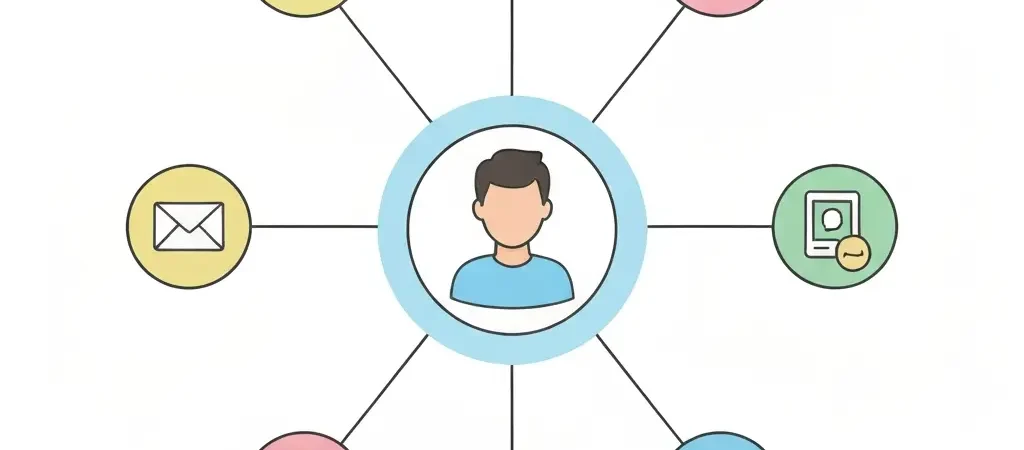
What Is a Customer Engagement Platform? The Complete 2026 Guide
A customer engagement platform (CEP) is software that centralizes and coordinates all interactions between a business and its customers across every channel — email, SMS, push notifications, in-app messaging, web, and social. Understanding what is a customer engagement platform matters because customer expectations have fundamentally shifted: 80% of customers now say the experience a company provides is as important as its products, according to Salesforce research.
The traditional siloed approach — email tool here, SMS provider there, web chat somewhere else — creates fragmented experiences that frustrate customers and make it impossible to deliver genuine personalization. A customer engagement platform solves this by unifying data, communication, and automation in one place. Platforms like CampaignOS take an open-source approach to this problem, giving businesses full data ownership while delivering the unified engagement layer modern customers expect.
What Is a Customer Engagement Platform?
At its core, a customer engagement platform is a unified system that:
- Collects behavioral data from all customer touchpoints (website, app, email, purchases, support tickets)
- Builds a real-time, unified customer profile for each individual
- Uses that profile to trigger personalized, contextually relevant communications
- Coordinates messaging across multiple channels so the experience is coherent
- Measures engagement outcomes and feeds insights back to improve future interactions
The “engagement” in the name is deliberate. CEPs are not primarily about acquisition (though they help with it) — they’re about deepening the relationship with existing customers through consistently relevant, timely interactions that increase retention, lifetime value, and advocacy.
What Does a Customer Engagement Platform Actually Do?
The practical capabilities of a customer engagement platform translate to specific business outcomes:
Unified Customer Profiles
Every customer interaction — a product page view, a support chat, an email click, a purchase — is recorded against a single customer profile. This eliminates the “which system has the real data?” problem that plagues teams with siloed tools. When a customer contacts support, the agent sees their full purchase history, campaign engagement, and lifecycle stage in one view.
Real-Time Behavioral Triggers
CEPs monitor customer behavior in real time and fire automated responses when specific conditions are met. A customer browses a pricing page three times in a week? Trigger an in-app message offering a demo. A subscriber hasn’t engaged with email in 60 days? Trigger a re-engagement SMS. The intelligence comes from having all the behavioral data in one place, not scattered across disconnected tools.
Cross-Channel Orchestration
True customer engagement requires coherence across channels. If a customer abandons a cart and you send an email, then an SMS three hours later, then a push notification the next day — that’s not orchestration, it’s spam across multiple channels. A CEP coordinates the timing and channel selection based on what’s known about each customer’s preferences and prior responses.
Personalization at Scale
With unified profiles and automation, a CEP enables sending genuinely personalized messages to millions of customers without manual effort. This is different from basic merge fields — it’s dynamic content blocks, recommended products, next-best-action suggestions, and lifecycle-stage-aware messaging all driven by real behavior data.
Engagement Analytics
CEPs provide deep analytics on engagement rates, channel performance, cohort analysis, and revenue attribution — connecting marketing activity to actual customer outcomes in ways that siloed tools cannot.
How Is It Different from CRM and Marketing Automation?
| Tool Category | Primary Focus | Primary User | Key Capability |
|---|---|---|---|
| CRM | Relationship records and sales pipeline | Sales team | Contact and deal management |
| Marketing Automation | Prospect nurturing and campaign execution | Marketing team | Workflows, email sequences, lead scoring |
| Customer Engagement Platform | Post-acquisition retention and growth | Marketing + Product + CS | Unified profiles, cross-channel orchestration |
In practice, the categories are converging. Modern marketing automation platforms have expanded to cover CEP functionality — including in-app messaging, mobile push, and real-time behavioral triggers — while CEPs have added marketing automation features. CampaignOS sits at this intersection, combining email automation, behavioral tracking, and multi-channel execution in a unified open-source platform.
What Are the Key Features to Look For?
When evaluating a customer engagement platform, prioritize these capabilities:
- Unified customer data — all behavioral and transactional data in one profile per customer, updated in real time
- Multi-channel delivery — email, SMS, push notifications (web and mobile), in-app messages, and ideally social and ads
- Real-time triggers — ability to fire messages within seconds of a triggering event, not on hourly batch processing
- Segmentation depth — dynamic segments that update automatically based on behavior, not just static list imports
- A/B testing — built-in experimentation for messages, timing, channels, and workflow branches
- Analytics and attribution — connecting engagement actions to business outcomes (revenue, retention, churn)
- API and integrations — the ability to pull in data from your product, commerce platform, and customer support systems
- Compliance tooling — GDPR consent management, opt-out handling, data retention controls
Who Needs a Customer Engagement Platform?
A customer engagement platform delivers the clearest ROI for:
- SaaS and subscription businesses — where retention and expansion revenue depend on continuous, relevant product engagement
- E-commerce brands — where repeat purchase rates, abandoned cart recovery, and loyalty program engagement drive unit economics
- Consumer apps — where push notification and in-app messaging are primary interaction channels
- B2B companies with long sales cycles — where nurturing over months requires consistent, personalized touchpoints across email and content
If you’re sending more than 10,000 emails per month, have customers across multiple touchpoints, or are experiencing churn you can’t explain, a customer engagement platform is likely the missing layer. The comparison isn’t just with other platforms — it’s across industries. Just as AI tools have transformed niche industries from academic writing to health coaching, engagement automation is now table stakes in virtually every customer-facing business.
What Are Examples of Customer Engagement Platforms?
| Platform | Best For | Pricing Model |
|---|---|---|
| CampaignOS | Multi-channel automation with data ownership | Free (open-source, self-hosted) |
| Braze | Mobile-first consumer apps | Enterprise (MAU-based) |
| Klaviyo | E-commerce (Shopify/WooCommerce) | Contact-based SaaS |
| Customer.io | B2B SaaS lifecycle marketing | Usage-based SaaS |
| Iterable | Mid-market cross-channel campaigns | Volume-based SaaS |
How Do You Choose the Right One?
Choosing a customer engagement platform comes down to five questions:
- What channels do your customers use most? — If mobile push is critical, choose a mobile-first CEP. If email and SMS are your core channels, most platforms work well.
- What is your technical maturity? — Self-hosted open-source platforms like CampaignOS require some technical setup but give you full control and zero vendor lock-in.
- What does your data model look like? — Complex event tracking (product usage data, purchase histories) requires API access and data integration capability.
- What is your scale? — Per-contact and per-message pricing can get expensive quickly. Calculate total cost at your current and projected scale before committing.
- What integrations do you need? — Make sure the platform connects to your CRM, e-commerce platform, data warehouse, or other systems you depend on.
Frequently Asked Questions
What is the difference between a customer engagement platform and a CRM?
A CRM manages customer records and sales pipelines, primarily for sales teams. A customer engagement platform automates personalized, cross-channel interactions to drive retention and growth, primarily for marketing and product teams. CRM is the database; CEP is the execution engine. Many businesses use both, integrated so data flows between them.
What channels does a customer engagement platform support?
Most customer engagement platforms support email, SMS, web push notifications, mobile push notifications, and in-app messaging. Advanced platforms also include direct mail, social media messaging, WhatsApp, and real-time web personalization. The goal is to reach customers on whatever channel they actually use.
Is a customer engagement platform only for large businesses?
No. Open-source platforms like CampaignOS make the core capabilities accessible to any business size. The key is having enough customer data to make personalization meaningful — which most businesses with more than a few hundred customers already have. The efficiency gains from automation are proportionally larger for smaller teams.
How does a customer engagement platform improve retention?
By identifying at-risk customers early (based on declining engagement metrics) and triggering personalized win-back campaigns before churn happens. CEPs also improve retention through better onboarding sequences that ensure customers experience the product’s value quickly, and lifecycle campaigns that remind customers of value they’re underusing.
How long does it take to implement a customer engagement platform?
A basic implementation — connecting your data sources, setting up key segments, and launching your first automated workflows — typically takes 2-6 weeks. Full implementation with advanced segmentation, multi-channel orchestration, and data integration from all sources can take 2-3 months. The investment pays back in improved retention and reduced manual marketing effort.
What data does a customer engagement platform need to work effectively?
At minimum: email address, subscription/opt-in date, and behavioral tracking data (email opens/clicks, page visits). Richer data — purchase history, product usage events, support interactions, demographic data — enables more sophisticated personalization. The platform becomes more powerful as you feed it more data sources over time.
What metrics should I track on a customer engagement platform?
Core metrics include: email open and click rates by segment, push notification opt-in and click rates, customer lifetime value by acquisition channel, churn rate by cohort, net promoter score trends, re-engagement campaign success rates, and revenue attributed to automated campaigns. The goal is connecting engagement activity directly to business outcomes.
Can I use a customer engagement platform for B2B marketing?
Yes. B2B customer engagement platforms focus on account-based engagement — tracking interactions at both the individual and company level, coordinating multi-stakeholder sequences, and integrating deeply with CRM for pipeline visibility. The channels used (email, in-app, webinar follow-ups) differ slightly from B2C, but the core automation and personalization logic is the same.
How is AI used in customer engagement platforms?
AI is used for send-time optimization (choosing the best time to message each individual based on historical open patterns), predictive churn scoring (identifying at-risk customers before they cancel), content recommendations (suggesting products or content based on behavior), and natural language generation for personalized message copy at scale.
Build Real Customer Engagement With CampaignOS
CampaignOS is the open-source customer engagement platform for teams that want multi-channel automation, unified contact profiles, and behavioral workflows — without paying enterprise prices or surrendering data control to a third-party vendor.