What Is a Customer Engagement Platform? The 2026 Definition and Buyer’s Guide
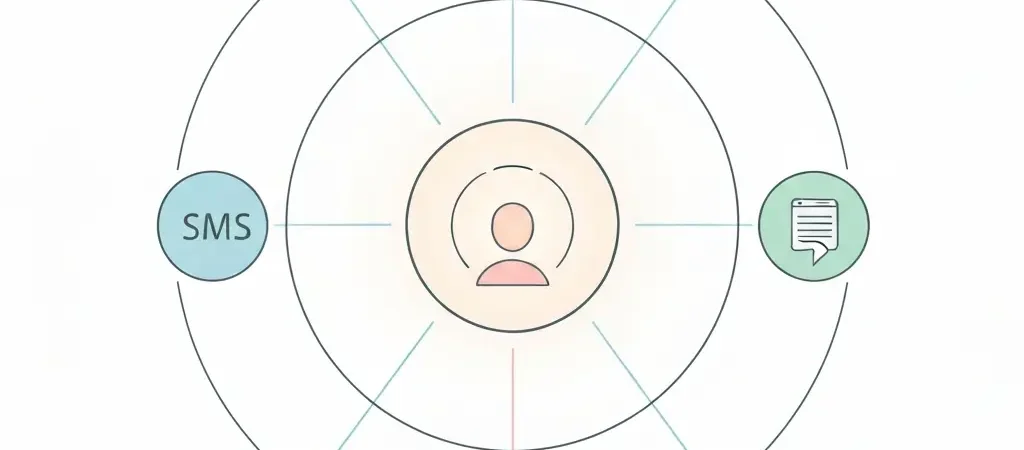
A customer engagement platform (CEP) is software that orchestrates personalized, real-time interactions with customers across every channel — email, SMS, push notifications, in-app messaging, and web — from a single unified system. Unlike standalone email tools, a CEP connects behavioral data, automation logic, and multichannel delivery into one coordinated workflow.
What Is a Customer Engagement Platform? Definition and Core Concepts
The term “customer engagement platform” emerged to describe a category of software that sits above traditional email service providers and below full enterprise CRM suites. Gartner defines CEPs as platforms that “enable organizations to manage and improve customer interactions across multiple touchpoints in real time.” In practical terms, a CEP does three things simultaneously:
- Collects behavioral data — what a customer clicks, views, purchases, and ignores across every channel
- Triggers personalized responses — automated messages timed and tailored to individual behavior
- Measures engagement holistically — tracks how interactions across channels affect retention, conversion, and lifetime value
According to research from SAP Emarsys, 82% of consumers are more likely to engage with personalized content delivered through automation. The customer engagement platform is the system that makes that personalization possible at scale without requiring manual segmentation for every campaign.
CEP vs CRM vs Marketing Automation: What Is the Difference?
These three categories overlap significantly in 2026, which is why buyers are often confused. Here is the clearest distinction:
| System | Primary Purpose | Data Focus | Output |
|---|---|---|---|
| CRM | Manage customer relationships and sales pipelines | Contact records, deal stages, sales activity | Sales reports, pipeline visibility |
| Marketing Automation | Automate marketing campaigns and lead nurturing | Email behavior, form fills, lead scores | Campaigns, drip sequences, MQLs |
| Customer Engagement Platform | Orchestrate personalized interactions across all channels | Behavioral events across every touchpoint | Personalized multichannel experiences |
The key distinction: a CRM is primarily a record-keeping system for sales teams. A marketing automation platform focuses on top-of-funnel lead generation. A customer engagement platform spans the entire customer lifecycle — acquisition through retention — and manages every communication channel from one system.
Core Capabilities of a Customer Engagement Platform
Not every platform marketed as a CEP delivers the same depth. The six capabilities that define a genuine customer engagement platform in 2026 are:
1. Unified Customer Data
A CEP aggregates data from web behavior, email opens, purchase history, support tickets, and mobile app events into a single customer profile. Without unified data, personalization is guesswork. The best CEPs update these profiles in real time so that a customer who just made a purchase is immediately removed from cart-abandonment sequences.
2. Behavioral Trigger Automation
CEPs trigger messages based on what customers do (or fail to do): browsing a product page, abandoning a cart, lapsing for 30 days, or reaching a loyalty tier. This event-driven logic is what separates CEPs from batch-and-blast email tools. Marketing automation software that generates $5.44 ROI per dollar spent — according to Nucleus Research’s multi-year analysis — relies almost entirely on behavioral triggers rather than scheduled blasts.
3. Multichannel Orchestration
A CEP coordinates the timing and sequencing of messages across email, SMS, push notifications, in-app, and web channels. A customer receives an email about an abandoned cart; if they don’t open within 4 hours, they get a push notification; if they still haven’t converted after 24 hours, a SMS with a discount fires. The channel mix and timing are managed by the automation engine, not manually. See how open-source platforms handle this in our comparison of free marketing automation platforms.
4. Segmentation and Personalization
Dynamic segmentation based on real-time behavioral data is a CEP requirement. Static lists are insufficient — a customer who purchases should shift from a prospect segment to an onboarding segment instantly. Personalization extends beyond first-name tokens to product recommendations, send-time optimization, and content variation based on lifecycle stage.
5. Analytics and Attribution
CEPs track engagement metrics at the individual and segment level: open rates, click rates, conversion rates, revenue attributed to automation workflows, and customer lifetime value changes. Without attribution, it’s impossible to know which automation sequences are working.
6. Channel Extensibility
As new channels emerge (WhatsApp, Telegram bots, conversational AI), a strong CEP architecture allows channel additions without rebuilding workflows. CampaignOS, for example, ships with email, SMS, web push, and Telegram in a single workflow builder — channels that would require three separate tools on many legacy platforms.
What Channels Does a Customer Engagement Platform Manage?
A fully capable CEP in 2026 manages the following channels from a single workflow:
- Email — transactional, promotional, and behavioral sequences
- SMS — time-sensitive alerts, promotions, and re-engagement
- Web push notifications — browser-based alerts that reach users outside email
- In-app messages — targeted messages within mobile or web applications
- Telegram / messaging apps — chatbot-driven engagement on messaging platforms
- On-site personalization — dynamic web content based on visitor segment
Marketers using three or more channels in their automation sequences see 250% higher purchase rates than single-channel programs, according to Emarsys’s 2026 benchmark data. The CEP is the infrastructure that makes this multichannel coordination operationally feasible.
How to Choose a Customer Engagement Platform in 2026
Evaluate CEPs against these five criteria in order:
- Channel coverage — does it natively support every channel your customers use?
- Data unification — can it create a single customer profile from all your data sources?
- Automation depth — does it support complex branching, lead scoring, and event-triggered sequences?
- Pricing model — contact-based pricing from SaaS vendors compounds quickly at scale; self-hosted open-source platforms like CampaignOS eliminate per-contact costs entirely
- Data ownership — where does your customer data live? Cloud-only platforms create GDPR and data sovereignty risk; self-hosted CEPs give you complete control
For teams that need the full architectural breakdown — including how CEPs compare to CRMs, open-source deployments, and enterprise platforms across data sovereignty, unit economics, and customisation — the complete customer engagement platform guide for 2026 covers every tier in detail.
Customer Engagement Platform Examples in 2026
CampaignOS — open-source CEP covering email, SMS, push, Telegram, and web from one platform. Self-hosted or managed, no contact limits, free.
Brevo — SaaS CEP with email, SMS, WhatsApp, and push. Strong free tier. Lacks self-hosting.
ActiveCampaign — deep automation and CRM integration. Email and SMS focused. Per-contact pricing.
HubSpot — enterprise-grade CRM + marketing automation convergence. High cost but unmatched sales-marketing alignment.
Iterable — enterprise CEP for high-volume, high-complexity customer journeys. Starts at $500+/month.
FAQ
What is a customer engagement platform?
A customer engagement platform (CEP) is software that orchestrates personalized customer interactions across multiple channels — email, SMS, push, in-app, and web — from a single system. It collects behavioral data, triggers automated responses based on customer actions, and measures engagement holistically across the entire customer lifecycle.
What is the difference between a CEP and a CRM?
A CRM (Customer Relationship Management system) is primarily a record-keeping tool for sales teams — it tracks contacts, deals, and sales activity. A customer engagement platform (CEP) focuses on orchestrating personalized marketing communications across every channel based on real-time behavioral data. CEPs span the full customer lifecycle; CRMs focus on the sales pipeline.
Do I need a customer engagement platform or just email marketing software?
If your customer communication strategy is limited to occasional email newsletters, a basic email marketing tool is sufficient. You need a customer engagement platform when you want to automate personalized messages based on user behavior, coordinate multiple channels (email + SMS + push), or manage the full customer lifecycle from acquisition through retention.
Is marketing automation the same as a customer engagement platform?
Marketing automation and customer engagement platforms overlap significantly. Marketing automation traditionally focuses on lead generation and top-of-funnel nurturing. A CEP extends automation across the entire customer lifecycle, including post-purchase retention, loyalty, and support interactions. In 2026, the categories are converging — most modern marketing automation platforms function as CEPs.
What channels should a customer engagement platform support?
A complete customer engagement platform in 2026 should support email, SMS, web push notifications, in-app messages, and at least one messaging app (WhatsApp, Telegram). Marketers using three or more channels see 250% higher purchase rates than single-channel campaigns, making multichannel support a core requirement rather than a premium feature.
Can I run a customer engagement platform for free?
Yes. Open-source platforms like CampaignOS provide full customer engagement platform capabilities — multichannel automation, behavioral triggers, segmentation, and analytics — completely free with no contact limits when self-hosted. The only costs are hosting infrastructure (typically $10–$50/month for small teams) and SMTP delivery if you use an external provider.
How much does a customer engagement platform cost?
Customer engagement platform costs in 2026 range from free (CampaignOS open source, Brevo’s free tier) to $15–$200/month for SMB SaaS plans, to $800–$2,000+/month for enterprise platforms like HubSpot Marketing Hub Pro or Iterable. Per-contact pricing models from SaaS vendors can significantly increase costs as lists grow beyond 10,000 contacts.
{
“@context”: “https://schema.org”,
“@type”: “FAQPage”,
“mainEntity”: [
{
“@type”: “Question”,
“name”: “What is a customer engagement platform?”,
“acceptedAnswer”: {
“@type”: “Answer”,
“text”: “A customer engagement platform (CEP) is software that orchestrates personalized customer interactions across multiple channels — email, SMS, push, in-app, and web — from a single system, collecting behavioral data and triggering automated responses based on customer actions.”
}
},
{
“@type”: “Question”,
“name”: “What is the difference between a CEP and a CRM?”,
“acceptedAnswer”: {
“@type”: “Answer”,
“text”: “A CRM is a record-keeping tool for sales teams tracking contacts and deals. A CEP focuses on orchestrating personalized marketing communications across every channel based on real-time behavioral data, spanning the full customer lifecycle.”
}
},
{
“@type”: “Question”,
“name”: “Can I run a customer engagement platform for free?”,
“acceptedAnswer”: {
“@type”: “Answer”,
“text”: “Yes. Open-source platforms like CampaignOS provide full CEP capabilities — multichannel automation, behavioral triggers, segmentation — completely free with no contact limits when self-hosted.”
}
}
]
}