What Is Omnichannel Marketing Automation? The Complete 2026 Answer
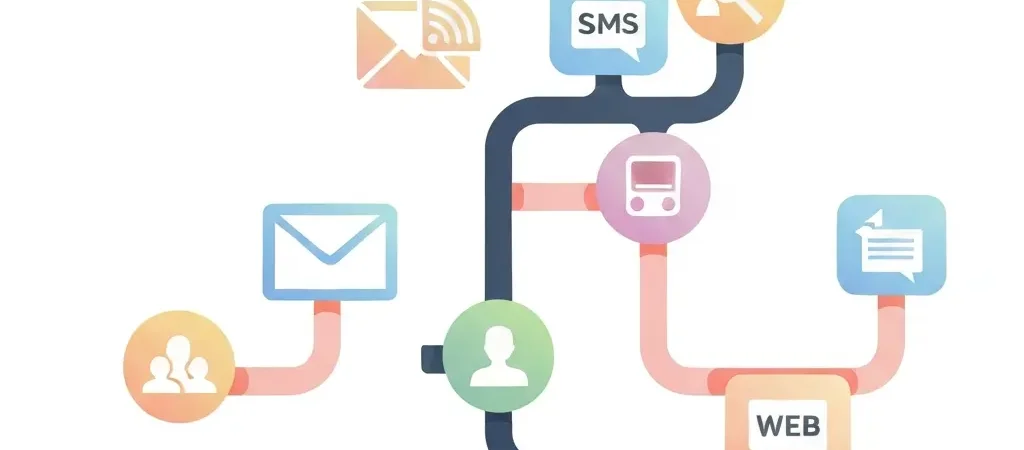
Omnichannel marketing automation is the practice of coordinating automated, personalized marketing across every channel a customer uses — email, SMS, push notifications, in-app messages, web, social, and ads — using a single unified customer profile to drive consistent, contextually relevant messaging. Understanding what is omnichannel marketing automation matters because customers don’t experience brands through single channels: they move between email, your website, your app, and social media fluidly, and they expect a coherent experience.
The data backs this up: customers who engage through three or more channels have a 90% higher retention rate and 13% higher average order value compared to single-channel customers (Omnisend). In 2026, omnichannel automation has moved from competitive advantage to competitive requirement in e-commerce and SaaS. Platforms like CampaignOS deliver this capability through open-source architecture that connects all your channels without vendor lock-in.
What Is the Difference Between Omnichannel and Multichannel?
This distinction is the most important concept to understand before implementing any omnichannel strategy:
| Dimension | Multichannel | Omnichannel |
|---|---|---|
| Data | Siloed per channel | Unified customer profile across all channels |
| Channel awareness | Each channel operates independently | Each channel knows what happened on the others |
| Customer experience | Inconsistent, potentially contradictory | Seamless and coherent regardless of channel |
| Automation logic | Per-channel rules with no coordination | Central orchestration layer controls all channels |
| Example failure | Customer gets abandoned cart email after purchasing via app | Purchase triggers cancellation of all pending cart messages |
Multichannel marketing is better than single-channel. Omnichannel is categorically different: it requires a central data layer where all channel activity is recorded, and a central orchestration layer that uses that data to make intelligent decisions about what to send, on which channel, at what time.
How Does Omnichannel Marketing Automation Work?
True omnichannel automation operates through three architectural layers:
Layer 1: Unified Customer Data Platform
Every customer interaction across every channel is written to a single customer profile in real time. A customer who clicks an email link, visits a product page, adds to cart via mobile app, and then responds to an SMS — all of those events are recorded against the same profile, with timestamps and context. This is the foundation. Without unified data, “omnichannel” is just a buzzword.
Layer 2: Central Orchestration Engine
The orchestration engine is the brain. It monitors the unified profiles for trigger conditions, applies rules about channel preference, timing, frequency capping, and message priority, and decides which action to take on which channel. When a customer abandons a cart on mobile, the engine might decide: email first (1 hour), then push notification (24 hours if email not opened), then SMS (48 hours if still no conversion).
Layer 3: Multi-Channel Execution
The execution layer sends messages through each channel’s delivery infrastructure: SMTP for email, SMS gateway APIs for text, browser or mobile push APIs for notifications, ad platform APIs for retargeting, and webhooks for custom integrations. The orchestration engine signals each delivery system; the delivery system handles the channel-specific formatting and timing.
What Channels Does Omnichannel Marketing Automation Cover?
A complete omnichannel automation stack covers:
- Email — the highest-ROI channel for most businesses; foundational to any omnichannel strategy
- SMS / MMS — 98% open rate, typically within 3 minutes; highest urgency and immediacy
- Web push notifications — browser-based notifications to opted-in desktop and mobile users
- Mobile push notifications — app-based notifications for businesses with a native mobile app
- In-app messaging — contextual messages shown within your product or website, tied to specific actions
- Paid retargeting — syncing audience segments to Facebook/Instagram, Google, or LinkedIn ads based on behavioral triggers
- Direct mail — automated physical mail, available through integrations with services like Lob, for high-value customer segments
What Are Real-World Examples of Omnichannel Automation?
E-Commerce: Abandoned Cart Recovery
A customer adds three items to their cart on desktop, leaves without purchasing. The omnichannel sequence:
- Hour 1: Email with cart contents and product images
- Hour 3: Push notification on mobile (if the app is installed and they didn’t respond to email)
- Day 1: SMS with 10% discount code (if no purchase from email or push)
- Day 3: Facebook retargeting ad showing the exact abandoned products
At each step, the sequence cancels automatically if the customer purchases — regardless of which channel triggers the conversion.
SaaS: Trial-to-Paid Conversion
A user starts a free trial. The omnichannel onboarding sequence monitors their in-app behavior:
- Day 0: Welcome email with getting-started guide
- Day 2: In-app message if they haven’t completed setup (with direct link to the key workflow)
- Day 5: Email featuring the specific features they’ve used with tips for getting more value
- Day 7: Push notification when trial enters final 3 days
- Day 10: Email and in-app message with upgrade prompt if they’ve hit a feature limit
B2B: Lead Nurture and Sales Handoff
A prospect downloads an ebook, triggering a coordinated sequence. Email nurture runs for two weeks. If the prospect visits the pricing page (tracked via web behavior), an SMS is sent offering to answer questions. If lead score crosses a threshold, a CRM task is automatically created for a sales rep — and the prospect receives a personalized email from the rep’s address via CampaignOS‘s one-to-one email feature.
What Are the Proven Benefits of Omnichannel Automation?
- 90% higher retention rate for customers who engage on 3+ channels vs. single-channel (Omnisend)
- 250% higher purchase frequency for omnichannel vs. single-channel customers (Harvard Business Review study)
- 10-20% increase in average order value from cross-channel engagement vs. single-channel
- Elimination of channel conflicts — customers no longer receive contradictory or redundant messages across channels
- Better attribution — knowing which sequence of touchpoints drives conversion enables smarter budget allocation
Across verticals, businesses that unify their channels and automate coordinated journeys consistently outperform those maintaining siloed channel operations. For the full breakdown of how these retention and engagement numbers compare across industries, see our customer engagement metrics and benchmarks guide for 2026. The automation principle applies broadly — just as Authenova demonstrates how connecting content, SEO, and publishing into one automated system outperforms managing each element separately, omnichannel automation outperforms isolated channel management in the same way.
How Do You Implement Omnichannel Marketing Automation?
A practical implementation sequence:
- Audit your current channel stack — list every channel where you communicate with customers, what data each captures, and where that data lives
- Choose a platform with native multi-channel support — look for email + SMS + push in one system, ideally with a unified contact database that all channels write to
- Define your customer journey stages — map the key moments in the customer lifecycle where automated messaging can add value: acquisition, onboarding, activation, retention, win-back
- Build the data layer first — connect your e-commerce platform, product database, or CRM before building workflows; workflows need data to personalize against
- Start with one cross-channel journey — the abandoned cart with email + push fallback is the most common starting point because it has clear measurement and fast ROI
- Add frequency caps and channel preferences — prevent message fatigue by limiting how many messages a customer can receive across all channels in a given period
- Measure cross-channel attribution — use UTM parameters, conversion tracking, and the platform’s attribution model to understand which channel combinations drive the most value
Frequently Asked Questions
What is the difference between omnichannel and multichannel marketing automation?
Multichannel marketing means you’re present on multiple channels but they operate independently with separate data. Omnichannel means all channels share a unified customer profile, so each channel is aware of what happened on the others. The result is coordinated, non-contradictory messaging that feels coherent to the customer regardless of which channel they use.
What channels should I include in omnichannel marketing automation?
Start with the channels where your customers actually engage. Email is universal and should always be included. Add SMS if you have an audience that has opted in to text. Web push is valuable for content sites and e-commerce. Mobile push requires a native app. Don’t add channels for the sake of being “omnichannel” — each channel needs genuine audience engagement to justify the setup cost.
How do you prevent messaging overload in omnichannel automation?
Use frequency capping — a rule in your automation platform that limits how many messages a customer can receive across all channels in a given time window (e.g., no more than 3 messages in any 24-hour period). Also use channel preference data: if a customer never opens email but always clicks SMS, route future messages to their preferred channel.
Is omnichannel marketing automation expensive to implement?
Enterprise platforms like Braze and Iterable are priced for large organizations. Open-source platforms like CampaignOS provide multi-channel automation capabilities at infrastructure cost only. Mid-market SaaS options like Klaviyo and Omnisend offer omnichannel features at per-contact pricing that scales from small to large. The implementation cost (setup time) is often larger than the platform cost for smaller businesses.
What data do you need for effective omnichannel automation?
You need: a unified customer identifier (email or customer ID) that links all channel activity to the same person; behavioral event data from all channels (email opens, website page views, purchases, app usage); channel opt-in status for each communication channel; and ideally customer lifecycle stage and segment data. Start with what you have and enrich over time.
How do you measure the success of omnichannel marketing automation?
Key metrics for omnichannel automation include: customer retention rate and churn rate by cohort, cross-channel conversion rates (what percentage of journeys result in purchase or goal completion), revenue attributed to automated sequences, average number of channels engaged per customer, and customer lifetime value trends. Compare these to pre-automation baselines to measure actual impact.
Can B2B companies use omnichannel marketing automation?
Yes. B2B omnichannel automation typically coordinates email, LinkedIn ads, in-app messaging, and sales rep outreach (triggered via CRM task) rather than SMS and push. The channels differ from B2C, but the principle is the same: coordinate multiple touchpoints using unified contact data to deliver a coherent buyer journey rather than disconnected channel blasts.
What is the most common mistake in omnichannel marketing automation?
The most common mistake is calling multichannel “omnichannel” without unifying the data. Businesses add SMS alongside email but don’t set up cross-channel suppression rules, resulting in customers getting an abandoned cart email AND an abandoned cart SMS 30 minutes apart. True omnichannel requires the channels to talk to each other through shared data and a central orchestration layer.
How does omnichannel automation improve customer retention?
Omnichannel automation improves retention by ensuring customers always receive relevant, timely communications on their preferred channel — reducing the friction and irrelevance that drives churn. At-risk customers (identified by declining engagement across channels) can be caught earlier because the unified profile shows engagement patterns no single channel could reveal on its own.
Automate Every Channel From One Platform
CampaignOS brings email, SMS, push notifications, and multi-channel workflows together in one open-source platform — with unified contact profiles that make true omnichannel automation possible at any scale.