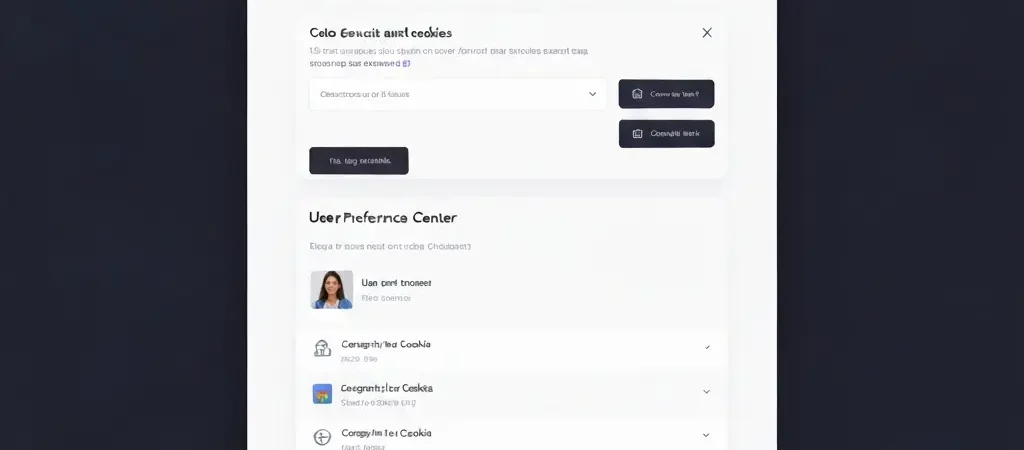
Consent Management Platform for GDPR: The Complete Guide for Marketers (2026)
GDPR enforcement has intensified every year since 2018, and 2026 is no exception. Total GDPR fines issued in 2025 exceeded €2 billion for the first time — with a significant proportion of violations related to insufficient consent management. For any business running email marketing, digital advertising, or analytics to EU users, a consent management platform for GDPR (CMP) is no longer optional infrastructure. It is the mechanism that proves you have the legal basis to process personal data.
This guide explains what a CMP actually does, how it integrates with your marketing automation stack, the leading platforms compared, and how to implement consent management that protects both your users and your business from regulatory risk.
What a Consent Management Platform Actually Does
A consent management platform performs five core functions:
- Consent collection: Presents users with a clear, legally compliant consent interface (cookie banner, preference centre, opt-in forms) that records their choices
- Consent storage: Maintains a tamper-proof log of each consent record — who consented, to what, when, using which version of the consent form, and from which IP address
- Consent enforcement: Blocks marketing tools and trackers from activating until consent is given (preventing GDPR violations from analytics tools, advertising pixels, and marketing scripts)
- Consent withdrawal: Provides users with a mechanism to withdraw consent, and automatically propagates that withdrawal to connected systems
- Compliance documentation: Generates the audit-trail evidence that regulators can request during an investigation
A CMP is distinct from a cookie banner generator. A basic cookie banner informs users of cookies; a proper CMP enforces consent preferences by actually controlling which scripts load. The distinction matters enormously for GDPR compliance — informing users without enforcing their choices is not consent management, it is theatre.
GDPR Consent Requirements in 2026
GDPR Article 7 and Recital 32 define valid consent with five requirements:
- Freely given: Users must have a genuine choice — consent cannot be a condition of accessing a service
- Specific: Consent must be given for specific purposes (email marketing, analytics, advertising) separately — blanket “I agree to all” consent is not valid under GDPR
- Informed: Users must understand what they are consenting to before they consent
- Unambiguous: Consent must be a clear affirmative action — pre-ticked boxes do not constitute valid consent
- Withdrawable: Users must be able to withdraw consent as easily as they gave it
In 2026, the EU’s Digital Markets Act (DMA) has added additional requirements for large platforms around consent — but for most marketing teams, the foundational GDPR requirements above remain the core framework. The GetApp GDPR compliance directory provides a useful reference for tools certified against these standards.
The 6 Best CMPs for Marketing Teams
1. Cookiebot by Usercentrics
Best for: Medium-to-large businesses needing automatic cookie scanning
Cookiebot automatically scans your website for cookies and trackers and categorises them without manual configuration. IAB TCF 2.2 certified, supports 40+ languages.
Pricing: From €9/month (up to 500 pages)
Standout feature: Automatic cookie scanning — no manual inventory needed
2. OneTrust
Best for: Enterprise businesses with complex consent requirements
The most comprehensive CMP on the market, with consent management, privacy impact assessments, data subject request workflows, and vendor management. Full GDPR, CCPA, and LGPD support.
Pricing: Enterprise pricing; contact for quote
Standout feature: End-to-end privacy programme management beyond just consent
3. Axeptio
Best for: Marketing teams prioritising user experience
Axeptio is known for its more user-friendly, visually appealing consent interfaces that improve opt-in rates compared to traditional cookie banners. Particularly popular with French and EU-based businesses.
Pricing: From €9/month
Standout feature: Higher opt-in rates through better UX design
4. Consentmanager.net
Best for: Teams wanting detailed analytics on consent performance
Provides consent A/B testing, detailed reporting on opt-in rates by page and country, and IAB TCF 2.2 compliance. Good option for teams wanting to optimise their consent UX systematically.
Pricing: From €19/month
Standout feature: A/B testing for consent banners
5. Iubenda
Best for: Small businesses and startups needing affordable compliance
Iubenda provides privacy policy generation, cookie consent management, and GDPR documentation at accessible pricing. Not as feature-rich as enterprise options but covers the fundamentals well for smaller organisations.
Pricing: From $27/year
Standout feature: Best value for compliance fundamentals
6. n8n-based Custom Consent Workflow
Best for: Teams already using n8n for marketing automation
For organisations with n8n infrastructure, building a custom consent management workflow using n8n + a consent database (Airtable or PostgreSQL) provides complete control over consent data with no per-contact fees. Requires more setup but offers maximum flexibility and data ownership.
See our n8n marketing automation workflows guide for the implementation pattern.
Integrating a CMP With Your Marketing Stack
A CMP should integrate with every tool in your marketing stack that processes personal data. The integration pattern:
- Tag Manager (GTM or similar): Your CMP triggers tags via your tag manager — only firing analytics, advertising, and marketing scripts when the user has consented to the relevant category
- CRM: Consent records sync to your CRM as custom fields on contact records — consent status, consent date, consent version, and source
- Email platform: Only contacts with documented marketing email consent appear in your email sending lists
- Advertising platforms: Consent data propagates to Google Ads, Meta Ads etc. via the IAB TCF framework — preventing personalised advertising to users who have not consented
The technical implementation is covered in our GDPR compliant email marketing checklist.
Consent Management for Email Marketing
For email marketing specifically, consent management has an additional dimension beyond cookie consent: subscription consent. Your CMP and email platform need to work together to ensure:
- Every email address added to your list has a documented opt-in record (timestamp, source, consent text version)
- Consent withdrawal (unsubscribes) is processed immediately and irrevocably
- Re-consent requests are not sent to contacts who have already unsubscribed
- Contacts who consented via a form are only added to lists covering the scope of that form’s consent text
This is directly linked to deliverability: documented consent lists produce lower spam complaint rates because every recipient actively wanted to receive your emails. See our email deliverability monitoring guide for the connection between consent management and inbox placement.
CMP Integration With CampaignOS
CampaignOS is built with GDPR compliance as a core design principle. The platform:
- Stores consent timestamps and source for every contact
- Enforces hard blocks on sending to contacts without documented marketing consent
- Processes unsubscribes and consent withdrawals in real time with no manual intervention required
- Provides GDPR data subject request tools for access, deletion, and portability
For external CMP integration, CampaignOS accepts consent data via API — so your CMP can push consent records to CampaignOS automatically when users opt in or withdraw. This creates a single source of truth for consent across your marketing stack.
Do It With CampaignOS
CampaignOS’s GDPR-native architecture means consent management is built in, not bolted on. Your contact database, consent records, and suppression lists are all managed in one place — no spreadsheet reconciliation required. Get started free at CampaignOS and build a compliant marketing programme from day one.
Frequently Asked Questions
Is a consent management platform legally required for GDPR compliance?
GDPR does not specifically require a CMP — it requires that you can demonstrate valid consent when processing personal data on that legal basis. A CMP is the practical mechanism for collecting, storing, and proving consent at scale. Without one, demonstrating compliance during a regulatory investigation becomes very difficult. For any business sending marketing emails or running digital advertising to EU users, a CMP is effectively required to meet the documentation standards regulators expect.
What is the difference between a cookie banner and a consent management platform?
A cookie banner informs users about cookies and may record their preferences. A consent management platform enforces those preferences by controlling which scripts and tools activate based on consent status. A banner without enforcement is legally insufficient — if your analytics and advertising tools fire regardless of what users click on your banner, you are not managing consent, you are performing the appearance of it.
How long does GDPR consent last before re-consent is required?
GDPR does not specify a fixed consent expiry period, but regulators expect consent to be regularly reviewed and re-obtained when it may no longer reflect current processing activities. Industry best practice is to seek re-consent every 12–24 months for inactive contacts, or whenever your privacy policy or the scope of data processing changes materially. For email marketing, an engagement-based approach is more practical: contacts who regularly open emails are implicitly re-confirming consent; contacts who have not engaged in 12+ months should go through a re-consent campaign.
Can I use legitimate interest instead of consent for email marketing?
Legitimate interest (Article 6(1)(f)) can potentially be used for B2B marketing to existing clients, but it cannot generally be used for unsolicited B2C marketing emails or for individuals who have not had a prior commercial relationship with you. GDPR recital 47 specifically warns against using legitimate interest to override individual rights in the context of direct marketing. For any new subscriber acquired via opt-in forms or website interactions, explicit consent remains the most defensible legal basis.
What happens if I process personal data without valid GDPR consent?
Processing without a valid legal basis (consent or otherwise) can result in fines of up to €20 million or 4% of annual global turnover (whichever is higher) under GDPR Article 83(5). Beyond financial penalties, regulators can issue processing bans that prevent you from marketing to EU citizens at all. In 2025, enforcement was particularly active around email marketing and advertising consent, with multiple large fines issued specifically for insufficient consent documentation.