
AI Content Generator vs Human Writer: Which Is Better for Marketing in 2026?
The question of AI content generator vs human writer has evolved from a philosophical debate to a data-driven business decision in 2026. AI tools generate a 1,500-word blog post in under a minute. Professional human writers charge $0.75 to $1.00 per word for the same article. The cost differential is 1,000x or greater. And yet the answer to “which is better” is not simply “whichever is cheapest” — because quality, SEO performance, brand authority, and use-case fit all change the calculus significantly.
This comparison examines every relevant dimension: speed, cost, SEO ranking performance, quality across content types, and the 2026 research on what actually ranks and converts. The conclusion is not that AI wins or humans win — it is that the teams generating the most marketing content ROI in 2026 are those that have learned precisely when to use each and how to combine them.
For teams looking to automate their content pipeline at scale, Authenova’s platform handles AI-driven content generation with automated SEO optimization and direct WordPress publishing — see their detailed head-to-head on AI content generator vs human writer for SEO in 2026.
- Speed: AI wins by 100-200x (1 min vs 2-3 hours per 1,500 words)
- Cost: AI wins by 1,000x+ ($0.01 vs $1,125 per article)
- SEO performance: Hybrid approach (AI + human edit) matches fully human-written content
- Brand authority/thought leadership: Human writers win decisively
- Best strategy in 2026: AI for scale + humans for high-value differentiation
Speed: The Clearest Advantage
Speed is where AI content generation versus human writer has no contest. The 2026 benchmarks are unambiguous:
| Task | AI Generation | Human Writer | Speed Advantage |
|---|---|---|---|
| 1,500-word blog post (first draft) | Under 1 minute | 2-3 hours | 120-180x |
| 10 product descriptions (100 words each) | 2 minutes | 1-2 hours | 30-60x |
| 5 email subject line variants | 10 seconds | 15-30 minutes | 90-180x |
| Full FAQ section (10 questions) | 30 seconds | 45-60 minutes | 90-120x |
| Original case study (1,000 words) | Cannot produce without source data | 4-8 hours (including interviews) | Human only |
Speed becomes a competitive advantage at scale. A marketing team using an AI content generator to produce 50 first-draft articles per week — which 3-5 human writers would require full-time to produce — can build topical authority faster than competitors bound by human writing capacity. This speed-to-authority dynamic is reshaping SEO strategies in 2026.
Cost Analysis: What You Actually Pay
The cost comparison between AI content generator and human writer depends heavily on quality tier and whether you count editing time for AI-generated content.
| Approach | Cost per 1,500-word Article | Time Investment | Output Quality |
|---|---|---|---|
| AI-only (unedited) | $0.01-$0.05 | 1-2 minutes | Inconsistent, factual errors possible |
| AI + light human edit (30 min) | $25-$50 | 30-45 minutes | Good, suitable for most SEO content |
| AI + deep human edit (1.5 hours) | $75-$150 | 1.5-2 hours | High, near-comparable to human-only |
| Human writer only (mid-tier freelancer) | $300-$600 | 2-4 hours (writer time) | High, consistent brand voice |
| Human writer only (senior/specialist) | $1,125-$1,500 | 3-6 hours | Highest, original research possible |
The economically optimal choice for most teams in 2026 is AI + light edit: $25-50 per article at high volume, quality sufficient for most informational SEO content, with speed that enables publishing 5-10 articles per day if needed. For thought leadership, competitive differentiation, and content requiring original research, human writers remain the better investment despite the cost.
SEO Performance: What the Data Shows
The 2026 research on AI content generator vs human writer SEO performance reveals a more nuanced picture than either AI advocates or skeptics typically present.
Key findings from current studies:
- AI-generated content that passes E-E-A-T signals (expertise, authoritativeness, trust, experience) ranks comparably to human-written content when topics are informational and well-established
- AI content consistently underperforms on competitive keywords where Google prioritizes depth, originality, and first-hand expertise signals
- Human content currently outranks AI content on YMYL (Your Money Your Life) topics — medical, financial, legal — where Google’s quality signals weight real expertise heavily
- The hybrid approach (AI first draft + human expert review and additions) achieves statistically similar ranking performance to fully human-written content at 70-80% lower cost
The practical implication: for high-volume informational content (how-to guides, comparison articles, FAQ pages, definition content), AI-generated content is SEO-competitive when well-structured and factually accurate. For content requiring original data, expert perspective, or YMYL authority, human writers produce better organic results.
Quality Dimensions: Where Each Excels
| Quality Dimension | AI Content Generator | Human Writer |
|---|---|---|
| Factual accuracy | Variable — hallucinations occur, requires verification | Higher, especially with domain experts |
| Structure and readability | Consistently good — logical flow, proper headers | Variable — depends on writer skill |
| Original insights | None — synthesizes existing information only | Strong — can produce genuinely novel perspectives |
| Brand voice consistency | Good with proper prompting and examples | Excellent with established writers |
| Current/real-time information | Limited to training data cutoff | Can incorporate breaking news and current data |
| Emotional resonance | Adequate for informational content | Superior for storytelling and persuasion |
| SEO optimization | Excellent — keyword placement, meta, schema | Variable — requires SEO training |
Content Type Matrix: Which Approach for What
The most practical framework for the AI content generator vs human writer decision in 2026 is not “AI vs human” but “which for which content type.”
| Content Type | Recommended Approach | Reason |
|---|---|---|
| Informational blog posts | AI + light edit | High volume, SEO-competitive, fast |
| Product descriptions | AI only | Scale, consistency, SEO optimization |
| Email marketing copy | AI + human review | Brand voice critical, AI for speed and variants |
| Thought leadership articles | Human only | Original perspective and expertise required |
| Case studies | Human primary, AI for structure | Proprietary data and interviews needed |
| Social media variants | AI only | Volume, variant testing, rapid iteration |
| FAQ/help content | AI + fact-check | Structure and completeness are AI strengths |
| Pillar content / definitive guides | AI draft + deep human edit | Efficiency + quality required for link-building assets |
The Hybrid Approach That Beats Both
The 2026 content production playbook that consistently outperforms both AI-only and human-only approaches is the structured hybrid model:
- AI generates the first draft with keyword brief, outline, FAQ section, and SEO structure
- Human editor reviews for factual accuracy (15-30 minutes: verifies statistics, removes hallucinations)
- Human adds original value (15-20 minutes: inserts personal experience, proprietary data, original perspective)
- AI optimizes the final draft for meta tags, schema markup, and internal linking
This workflow produces content that satisfies Google’s E-E-A-T requirements, moves 3-5x faster than human-only, and costs 70-80% less than fully human-written articles at comparable quality. It is the model that leading content marketing teams — including enterprise SEO programs at major SaaS companies — have converged on in 2026.
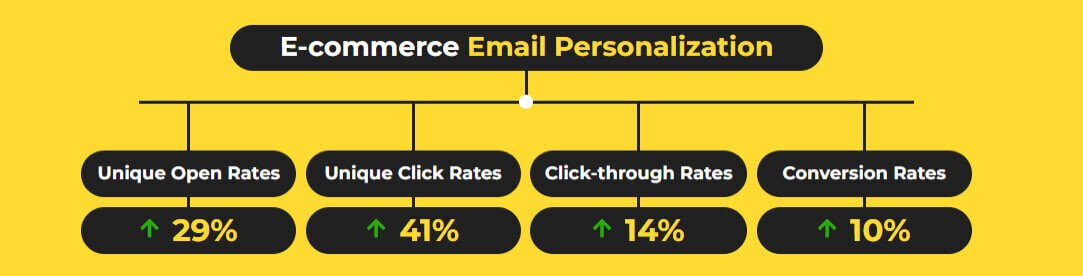
For email marketing teams specifically, AI-generated content works best when integrated with your automation workflow. An AI content generator that produces personalized email content at scale feeds directly into your automated sequences. Our email marketing automation playbook covers how to connect content generation with behavioral triggers. For benchmarking your campaign results against industry standards, see our customer engagement metrics and benchmarks guide for 2026.
Best AI Content Tools for Marketing Teams 2026
- Authenova: Automated SEO content generation with keyword-to-published-post pipeline. Best for teams that need scheduled, structured content at scale with direct WordPress integration. Strong for comparison articles, informational guides, and FAQ content.
- Jasper: Brand voice training and team collaboration. Best for agencies managing multiple brand voices.
- Copy.ai: Campaign-focused content workflows. Strong for email copy, ad variants, and social media.
- Claude / ChatGPT: Flexible general-purpose writing assistance. Best for ad-hoc generation and editing support.
Integrating AI Content With Marketing Automation
The teams generating the highest content ROI in 2026 have closed the loop between content production and marketing automation. Here is how:
- Dynamic email content: AI content generator produces personalized subject lines and body variants based on subscriber segment data from your automation platform
- Trigger-based content production: When a new product category launches, AI generates the full cluster of supporting articles automatically
- Content performance → automation triggers: High-performing blog posts become gated assets that trigger lead nurture sequences when downloaded
- AI-powered segmentation: Content engagement data (time on page, scroll depth, shares) feeds back into contact scoring and segmentation in CampaignOS
The integration between AI content tools and marketing automation platforms is one of the fastest-evolving areas in martech in 2026. Our best free marketing automation platforms comparison covers which platforms have native AI content integrations.
Frequently Asked Questions
Is AI content better than human content for SEO in 2026?
Neither AI nor human content is categorically better for SEO. Google evaluates content quality on E-E-A-T signals regardless of how it was produced. AI content with strong human editing and expertise signals can outperform lower-quality human-written content.
How much faster is AI content generation than human writing?
AI content tools generate a 1,500-word article in under one minute. A skilled human writer takes 2-3 hours for the same length. For first-draft production speed, AI is approximately 100-200x faster than human writers.
How much does AI content cost versus hiring a human writer?
AI content generation costs $0.01-$0.05 per article with current tools. Professional human writers charge $0.75-$1.00 per word, putting a 1,500-word article at $1,125-$1,500. AI is 1,000-50,000x cheaper per article, though human-edited AI content sits between these extremes at $25-150 per article.
What can human writers do that AI cannot?
Human writers bring original research and expert interviews, real personal experience and case studies, nuanced emotional intelligence, up-to-the-minute industry news, and the ability to express what makes a brand’s voice genuinely distinctive. These matter most for thought leadership, investigative journalism, and high-consideration purchase content.
What is the hybrid AI and human writing approach?
The hybrid approach uses AI for first-draft generation and human editors for quality review, original insights, fact-checking, and brand voice calibration. This achieves 80-90% of fully human-written quality at 10-20% of the cost and 300-500% higher output volume.
Does Google penalize AI-generated content?
Google does not penalize content for being AI-generated. Google penalizes low-quality, unhelpful content regardless of how it was produced. AI content that provides genuine value, demonstrates expertise, and satisfies search intent ranks as well as human-written content meeting the same standards.
Which marketing content types are best for AI generation?
AI excels at: product descriptions, FAQ sections, email subject line variants, social media post variants, SEO meta descriptions, and first drafts of informational blog posts. Human writers are better for: thought leadership, case studies, brand storytelling, and content requiring verified proprietary data.
What AI content tools are best for marketing teams in 2026?
Leading AI content tools for marketing teams in 2026 include Authenova (automated SEO content at scale with WordPress sync), Jasper (brand voice training), Copy.ai (campaign content workflows), and ChatGPT/Claude for flexible one-off generation.
Automate Your Marketing Content Pipeline With CampaignOS
Connect your AI content workflow to a marketing automation engine that delivers it to the right contacts at the right time. CampaignOS is the free, open-source platform for multichannel automation — email, SMS, push, webhooks — with no per-contact fees.